A sump pump is the last part of a drainage system, and it is sized to the water, not to the shelf
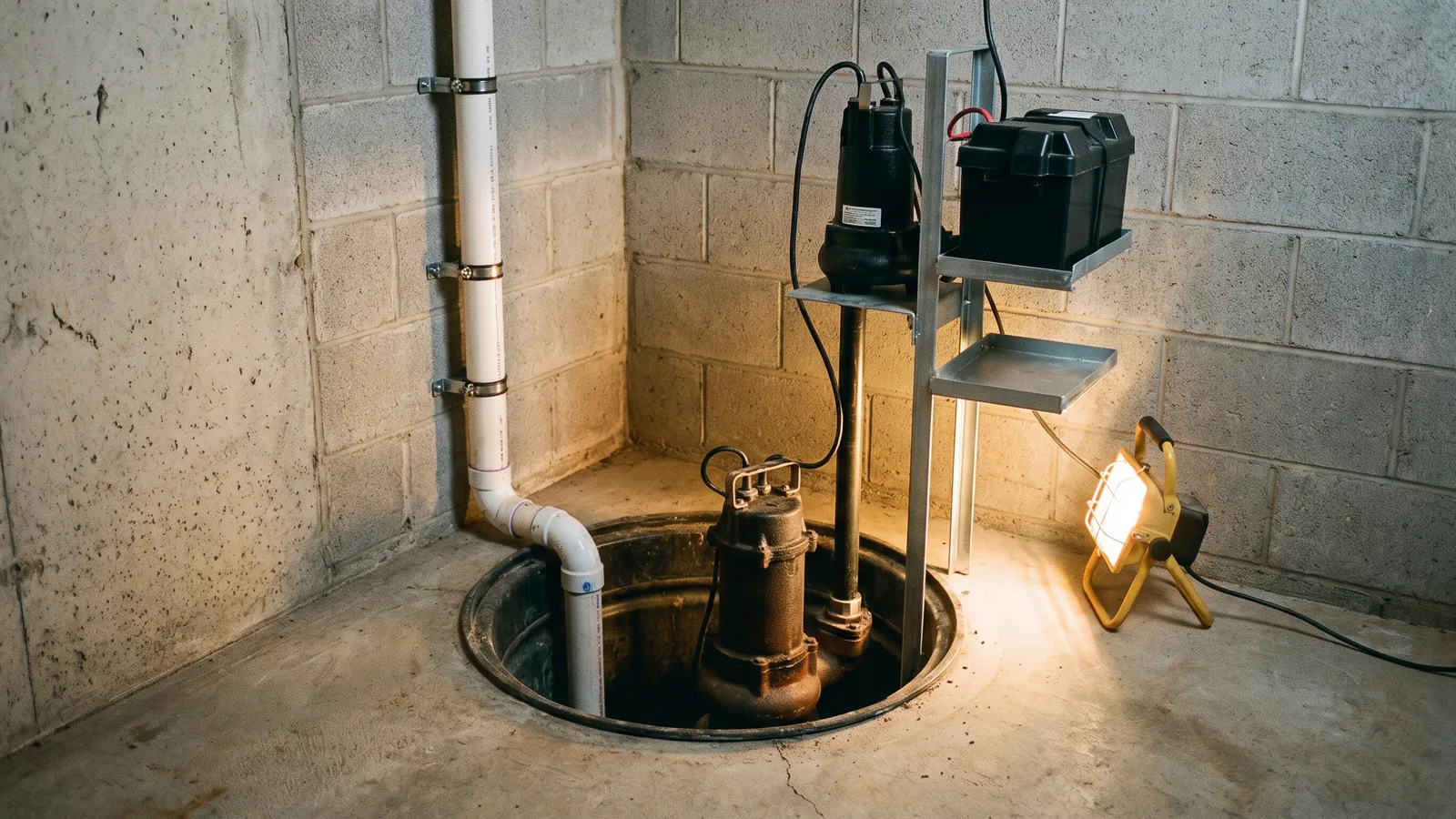
A pump in a hole does nothing unless water is being led to the hole. Done right, a sump sits at the low end of a drain tile loop, in a basin with a lid, with a check valve, a discharge line that ends well away from the house, and a second pump on a battery for the night the power goes out in the same storm that fills the basin.
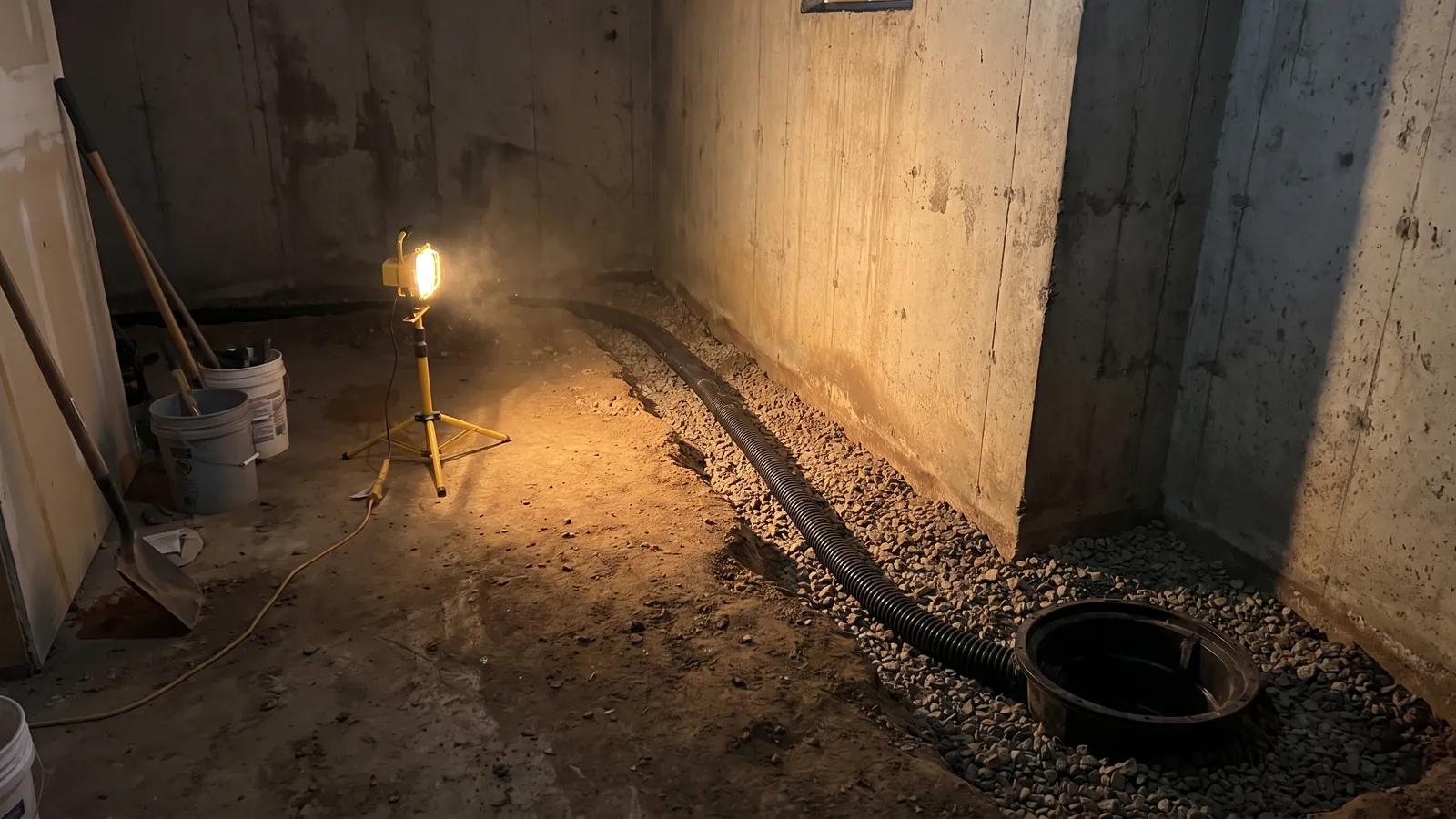
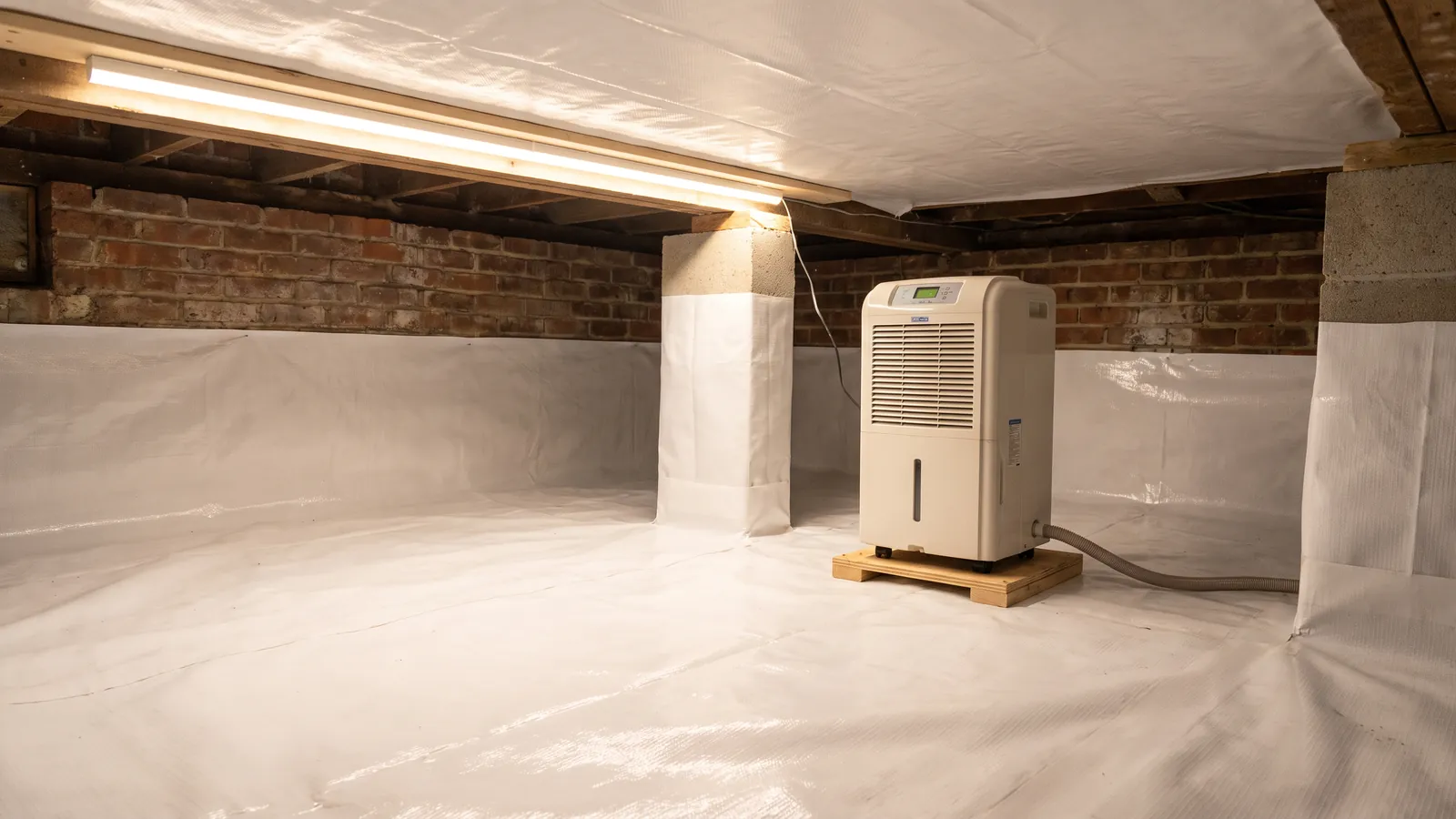
Huntsville basements take on water for a reason the rest of the state does not share: the ridges on the east side, from Monte Sano around to the slopes above Hampton Cove, hold a perched water table in the clay above the limestone, and it rises with the spring rains and the late-fall ones. Crawl spaces across the county fill the same way from the fifty-five inches a year that fall here. A sump is how that water leaves once it has been collected, and collection comes first. On a basement that means a drain tile loop at the base of the walls feeding the basin; in a crawl space it means grading the dirt to a low point and running perforated pipe to the pit. A pump dropped into a bare hole in the corner catches whatever happens to wander by and ignores the rest.
The parts are ordinary and the details are what matter. The basin is a lined pit of eighteen inches or more with a sealed lid, so it does not fill with silt, radon or crawl-space air. The primary pump is a submersible unit sized by lift height and the inflow measured on a wet day; most houses here need less capacity than the box at the store suggests, and a pump cycling every forty seconds burns out faster than one sized to run for a minute. The check valve on the discharge keeps the column of water in the pipe from running back into the basin every time the pump stops. The discharge line is the part most installations get wrong: it should leave the house, run downhill, and end at least ten feet out, never into a footing drain, never at the neighbor's fence and never where it will freeze solid in January.
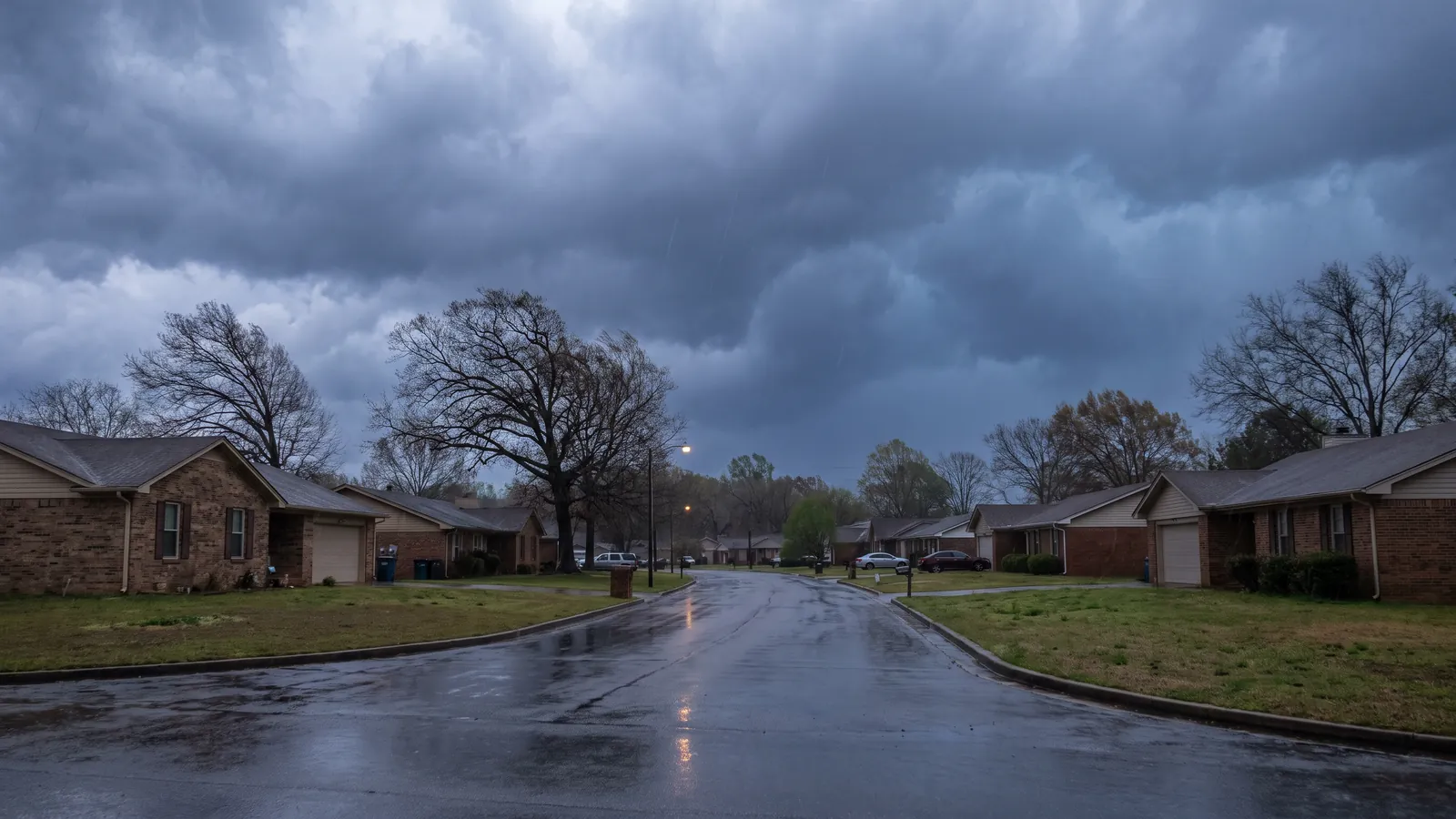
Then the battery backup. The storms that fill a basin are the storms that take the power down, and a sump that quits in the first hour of a two-inch rain is a pump that was never there. A second pump on a deep-cycle battery sits above the primary in the same basin and runs for several hours on its own; the better controllers text you when it kicks in. Houses with a lot of inflow get a dual-pump arrangement so the second unit shares the load rather than waiting. In parts of the county the groundwater carries enough iron that a rust-colored slime called iron ochre grows in the basin and the line; it clogs pumps, and a basin that has it needs a lid, a cleanout and a yearly flush written into the plan.
A sump in an existing basement is a cut through the slab and a trench to the wall, so it is usually installed with the drain tile and priced on the same sheet. No City of Huntsville permit is normally needed for the pump itself; the drain tile trench and any exterior discharge trench may be, and Alabama 811 marks the yard before a discharge line is buried. The report says which applies to your house.
What this work includes
Inflow measured first
Where water enters and how fast, checked on a wet day where possible, so the pump is sized to the house rather than picked off a shelf.
Basin with a sealed lid
An eighteen-inch or deeper lined basin at the low point of the drain tile, lidded to keep out silt, crawl-space air and small animals.
Primary plus battery backup
A submersible primary sized to run in minute-long cycles, and a second pump on a deep-cycle battery for the storm that takes the power out.
Discharge that leaves the property
Buried line out at least ten feet, downhill, with a freeze-proof end, and a check valve so the pipe does not drain back into the pit.
Iron ochre planned for
Where the groundwater runs orange, a cleanout, a lid and a flushing schedule go on the sheet so the pump is not replaced every two years.
Tied to the drainage
The sump is priced with the drain tile or crawl-space grading it serves; a pump alone is offered only when the collection already exists.
Sump pump installation prices in Huntsville, AL
| Item | 2026 range | What changes it |
|---|---|---|
| Inspection and inflow check | $0 | Free; includes where the water is coming in |
| Sump basin and primary pump, installed | $1,200 – $2,600 | Slab cut, basin, pump, check valve, lid |
| Battery-backup pump added | $600 – $1,100 | Deep-cycle battery and controller |
| Dual primary pumps, high inflow | $900 – $1,600 | Second submersible and alternating switch |
| Buried discharge line to daylight | $450 – $1,400 | Length, grade, freeze-proof outlet |
| Interior drain tile feeding the sump | $65 – $110 per ft | See waterproofing |
| Crawl space sump with grading and pipe | $1,800 – $3,800 | Access height and pipe run; see encapsulation |
| Replace a failed pump, like for like | $450 – $900 | Where basin and discharge are sound |
These are 2026 Huntsville-area ranges meant for budgeting, not quotes. The technician measures first and prices the job on site, each item on its own line; nothing is dug, injected or lifted until you have agreed to the sheet, and the sheet holds for 30 days.
From recent jobs
Questions about sump pump installation
My pump runs all the time. Is it broken?
Usually not; usually the basin is too shallow, the float is set low, or a downspout is feeding the drain tile. A pump that cycles every half minute wears out early, so the fix is in the basin and the water, not a bigger motor. The inspection finds which.
Do I need a battery backup?
If water comes in during storms, yes, because the storm that fills the basin is the one most likely to take the power out. If the sump handles slow groundwater between rains, a backup is good insurance but not the first dollar to spend.
Where should the discharge go?
Downhill, out at least ten feet, onto ground that drains away from the house, and not onto the neighbor's lot or into the footing drain. Some Huntsville subdivisions have rules about discharging to the street; the report notes it where that applies.
What is the orange slime in my pit?
Iron ochre, a bacterial growth fed by iron in the groundwater, common in parts of the county. It is harmless to people and hard on pumps. The answer is a lidded basin, a cleanout on the discharge and a flush every year or so.
Can a sump go in a crawl space?
Yes, and in many houses here it should. The crawl is graded to a low point, perforated pipe collects the water under the vapor barrier, and a lidded basin with a pump sends it out. It is part of most encapsulation jobs.
How long does a pump last?
Seven to ten years for a decent primary that is sized right and not cycling constantly; batteries three to five. The report lists the make and model so you can check, and the warranty is the manufacturer's and the contractor's, not a promise this site makes.