Foundation cracks: the ones to fix this week, and the ones to watch for a season
Most cracks in a Madison County house are the concrete and the brick doing what they do on moving clay. A few are the house telling you something important. The difference is in the direction, the width, the pattern and, above all, whether the crack is still changing. Here is how to read one with a tape measure and a camera.
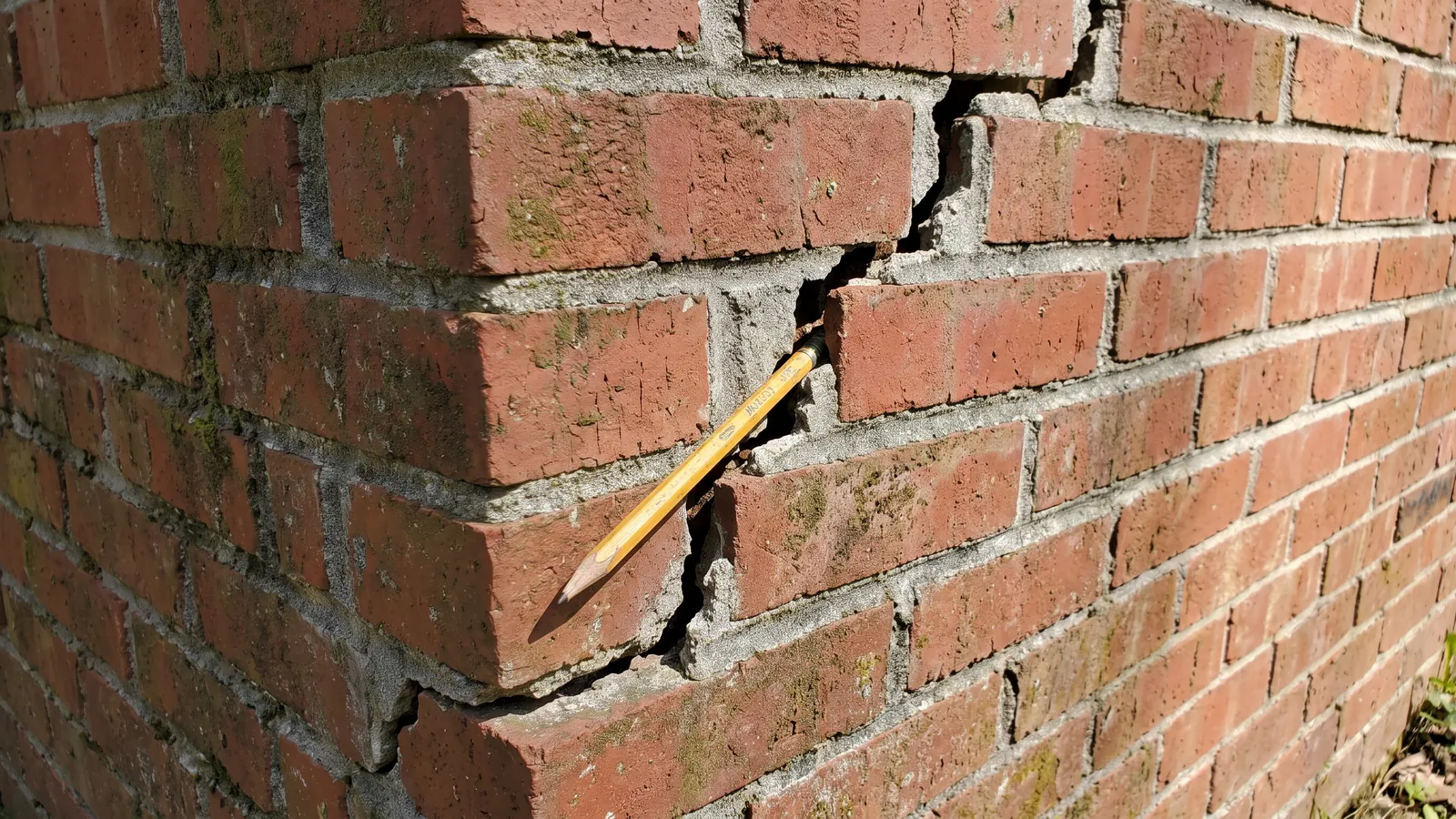
Start with a photo. Put a coin or a tape in the frame, note the date, and take it again in three months. A crack that does not change is a different animal from one that does, and no amount of describing it over the phone beats two dated photos.
Direction tells you the force
Vertical and near-vertical
In a poured concrete wall or a slab, a vertical crack is usually shrinkage: the concrete curing and pulling in on itself in the first years, or the slab flexing a little with the seasons. Hairline and dry, it is cosmetic. Wider than a quarter inch, wider at the top than the bottom, or wet, it earns an inspection.
Diagonal
A diagonal crack running from the corner of a window or a door toward the ceiling or the floor is the wall racking as one side of the house drops relative to the other. One of these by itself can be a bad winter; several in the same quarter of the house, all leaning the same way, point to a settling corner.
Horizontal
A horizontal crack in a basement wall, especially a block wall and especially about a third of the way up, is the wall bending inward under soil pressure. On the east side of Huntsville, where the perched water table loads the uphill wall every spring, this is the crack that goes to the top of the list. Measure the bow with a string line; more than an inch is a call this week.
Stair-step
Through brick or block mortar, a crack that climbs in steps along the joints is the masonry following a footing that has dropped at one end. Hairline and old, with paint in it, it may have happened in 1990 and stopped. Fresh mortar edges, more than a quarter inch wide, or a gap you can see daylight through means the footing is still going.
The decision table
| What you see | Likely cause | What to do |
|---|---|---|
| Vertical hairline in a poured wall or slab, dry | Shrinkage | Photograph and watch; no repair needed |
| Vertical crack, wet or leaking after rain | Shrinkage crack letting groundwater through | Polyurethane injection, $450–$900; check grading |
| Vertical crack wider than 1/4 in, wider at top | Differential settlement | Inspection this month |
| Diagonal from a window or door corner | Wall racking from settlement | Inspection; several together, this month |
| Horizontal in a basement wall, no bow | Soil pressure starting | Inspection; measure the wall |
| Horizontal with a visible inward bow | Wall failing under hydrostatic load | Call this week |
| Stair-step in brick, hairline, painted over | Old settlement, probably stopped | Photograph and watch |
| Stair-step, fresh, over 1/4 in, or growing | Active footing settlement | Inspection this month |
| Crack in the slab with one side higher than the other | Slab heave or settlement | Inspection; check for a plumbing leak |
| Any crack that changed since the last photo | Movement | Inspection |
What width means
Hairline is under a sixteenth of an inch, the width of a credit card edge. Up to an eighth is common and usually harmless in a poured wall. A quarter inch is the width where repair starts to be worth the money even if the crack has stopped, because water and insects use it. Past a quarter inch, or any width that is different at the top than the bottom, the crack is a symptom and the question is what moved.
Why Huntsville cracks have their own rhythm
The clays here, Decatur silty clay loam, Dewey silt loam and Colbert silty clay, shrink in a dry August and swell in a wet April, and a house moves a little with them every year. Add 55 inches of rain, winters with real freeze-thaw that pries at mortar joints, and the perched water table along the eastern ridges, and the result is a lot of cracks that open a hair in late summer and close in spring. That is normal. A crack that opens and does not close, or that is wider each August than the last, is the one to measure.
What repair looks like
A crack that has stopped moving and only lets water in is injected: polyurethane for a leaking crack, epoxy for a structural one, $450 to $1,100 either way. A crack that is still moving is not fixed by filling it; the footing is stabilized on piers first, the wall is strapped or anchored first, or the water that is pushing is drained first, and the crack is sealed last. A contractor who offers to fill a growing crack and call it done is treating the symptom.
What people ask about this
Should I fill a hairline crack myself?
A dry hairline in a poured wall can be left alone or sealed with a hardware store caulk for appearance. Do not fill a crack you are planning to have inspected; the filler hides exactly what the technician needs to see. Photograph it instead.
How fast does a crack have to grow to be serious?
Any measurable growth over a season is movement worth looking at. An eighth of an inch over a year is active settlement. Movement you can see week to week is a call now.
Can a crack be structural and still be hairline?
Yes, at the start. A horizontal crack in a basement wall begins as a hairline and stays one until the wall starts to bow. Direction and location matter more than width for that one.
Does brick crack on its own?
Brick veneer expands and contracts with heat and moisture and will sometimes crack at a long run or at a corner without the foundation being involved. Stair-stepping that lines up with a sloped floor inside, or a gap at the top of the crack, points to the footing instead.
Will injection fix a leaking crack for good?
A polyurethane injection into a crack that has stopped moving usually does. If the crack keeps working with the seasons, the seal can split and the job needs the movement addressed, which is why the inspection comes first.
Keep reading: Foundation crack repair · Signs a house needs attention · Bowing basement wall repair