Foundation repair in Decatur, on the silt the river left behind
Decatur is across the Tennessee River in Morgan County, and the ground near the river is not the county's red clay but a deep bed of silt and sand the river laid down. The older neighborhoods north of Sixth Avenue sit on it, and they have the problems a riverside town has: slow settlement, damp basements, and a water table that moves with the river.
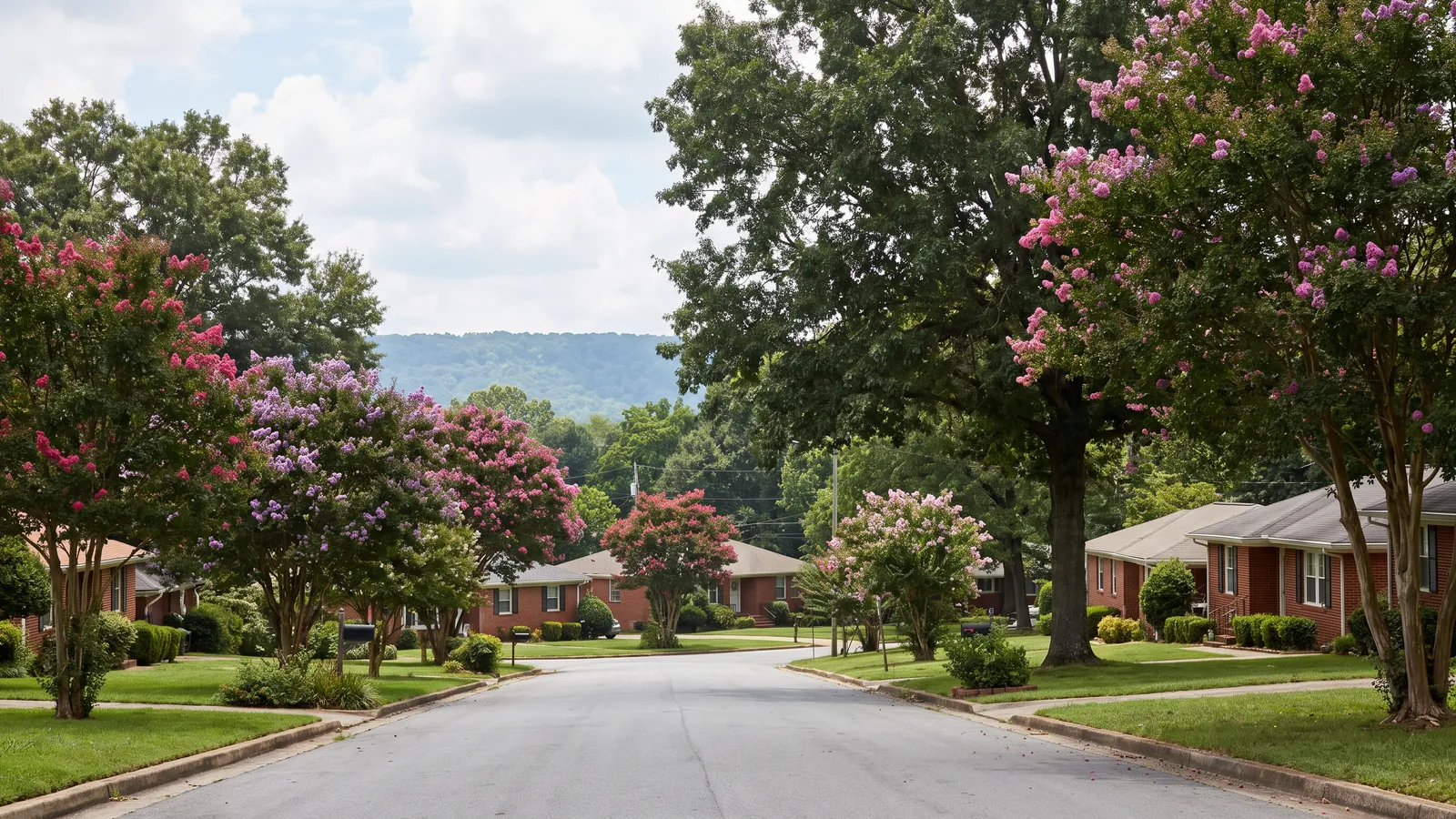
The oldest houses in Decatur, in the historic districts near the river and along the streets off Sixth Avenue, are the ones we are called to most. Many are on crawl spaces, a good number have basements, and almost all were built before anyone compacted a pad or extended a downspout. Riverside silt compresses slowly under a house for decades, so a corner that has dropped an inch and a half may have taken sixty years to do it and may not be finished. The brick on these houses is often original and soft, the mortar is lime, and a stair-step crack in it has usually been patched twice. The inspection reads the floor with a laser, gauges the cracks, and looks for the fresh hairlines above the old repairs that say movement is still going on.
Water in Decatur has two sources, and the second is the one people do not expect. The first is the usual fifty-five inches of rain a year and the downspouts that put it at the footing. The second is the river: the water table in the low streets rises and falls with the Tennessee, and a basement that is dry in September can take on water in March without a drop of rain hitting the house. A sump sized to that, with a battery backup, and interior drain tile that catches water rising at the floor-wall joint are the right tools; an exterior membrane helps with surface water and does little against a rising table. The report tells you which water you have.
South and west of downtown, the newer subdivisions off Beltline Road and toward the Morgan County line are on firmer ground and behave like the rest of North Alabama: a slab edge drops in its first decade as fill settles, a crawl space stays damp, a brick corner cracks. Those get the same laser survey and the same sheet, and more often than not the written advice is drainage and a date to look again.
Decatur is its own city with its own building department, so structural underpinning and lifting there are permitted through the City of Decatur, not Huntsville or Madison County, and the crew files it. Alabama 811 is called before any excavation; the gas and water lines in the older streets are shallow and not always where the map says. Pier work usually crosses the $10,000 line for Alabama's residential home builder's licence, and the contractor's HBLB number is on the sheet. Driving to Decatur adds nothing to the price; the river is twenty minutes from the shop.
How a Decatur job runs
Old brick read carefully
Soft original brick and lime mortar on the historic houses are gauged and photographed, fresh hairlines separated from old patches, before any repair is priced.
Piers in slow silt
Push or helical piers driven through the river-bottom silt to a bearing layer, with depth logs, under corners that are still dropping.
Basements that follow the river
Interior drain tile and a sump with battery backup sized to a water table that rises with the Tennessee, not only to the rain.
Crawl spaces in the historic districts
Leaning piers replaced on footings, girders lifted, joists sistered, vapor barrier where the dirt stays damp.
City of Decatur permits
Structural work permitted through Decatur's own building department; the crew files it and calls Alabama 811 for the shallow lines in the old streets.
Newer subdivisions, same inspection
First-decade slab settlement off Beltline Road read with the laser and often answered with drainage and a return visit.
Streets, subdivisions and landmarks we reach
- Historic districts near the river and along Sixth Avenue
- Streets off Gordon Drive and Somerville Road
- Neighborhoods along Beltline Road
- Homes toward Point Mallard and the Wheeler refuge edge
- Subdivisions west toward the Morgan County line
What we repair in Decatur
- Settled foundations put back on bearing with piers under slabs or new piers in the crawl space, and leveling to a measured target
- Cracks gauged and sealed with the right resin, bowing walls held with straps or anchors
- Basement waterproofing, sump pumps with battery backup, French drains and downspout work
- Crawl space encapsulation, free inspections before a purchase or after a storm, and commercial slabs
What Decatur owners ask first
Why does my basement get wet when it has not rained?
The river. In the low streets of Decatur the water table rises with the Tennessee, and a basement floor can take water from below in a wet spring without a storm overhead. The answer is interior drain tile at the floor-wall joint and a sump with a battery backup, sized to that inflow.
My house is a hundred years old. Can it be lifted?
Carefully, and usually partially. Old brick and lime mortar do not like sudden movement, so the target is to stop the settlement and close the worst of it, not to chase level. The inspection sets that target with you and the sheet says what the lift will and will not change.
Who issues permits in Decatur?
The City of Decatur, through its own building department. It is a different office from Huntsville's and from Madison County's, and the crew files there. Permit fees and the inspection are on the sheet.
Do you charge more to come to Decatur?
No. Morgan County is twenty minutes across the river and the inspection is as free in Decatur as it is in Huntsville. Repair prices are the same ranges; the depth of the piers in the silt is what moves them.
What about the newer houses south of town?
Those behave like the rest of the region: a slab edge dropping in its first decade, a damp crawl space, a brick corner cracking. The same laser survey tells you whether it has stopped, and drainage is usually the first fix.
Also close by: Athens · Madison · Owens Cross Roads · every town we cover