Encapsulation for the crawl space that is making the rest of the house damp
Under a lot of Huntsville ranch houses is a dirt floor, a few vents, and air at 80 percent humidity all summer. That air comes up through the floor. Encapsulation seals the dirt, dries the air and gives the piers and joists a chance to stop moving with the weather.
- Find out where the water is coming from. Standing water in a crawl space is a drainage problem before it is a crawl space problem: a downspout at the foundation vent, a grade that slopes toward the house, a plumbing leak, or on the east side the same perched water table that fills basements. The inspection traces it, because a liner laid over a spring is a liner floating on a spring.
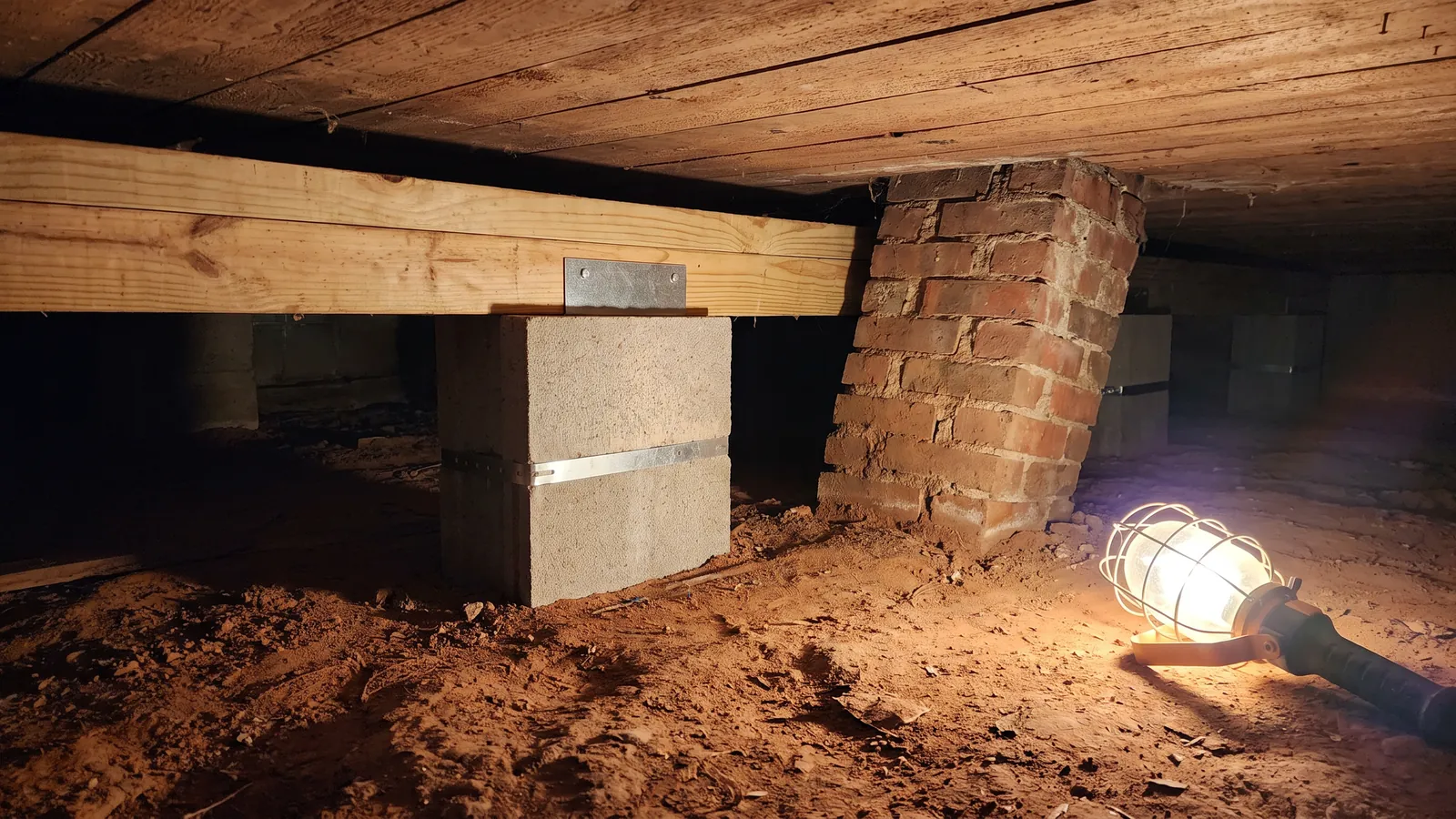
- Measure the frame. A laser survey of the floors above and a look at every pier, beam and joist below. Piers that have settled or leaned, joists that have sagged, beams that have been shimmed with scrap over the years, and any rot where wood has sat on damp soil, are written up and priced separately so the encapsulation goes over a frame that has been put right, not one that is still moving.
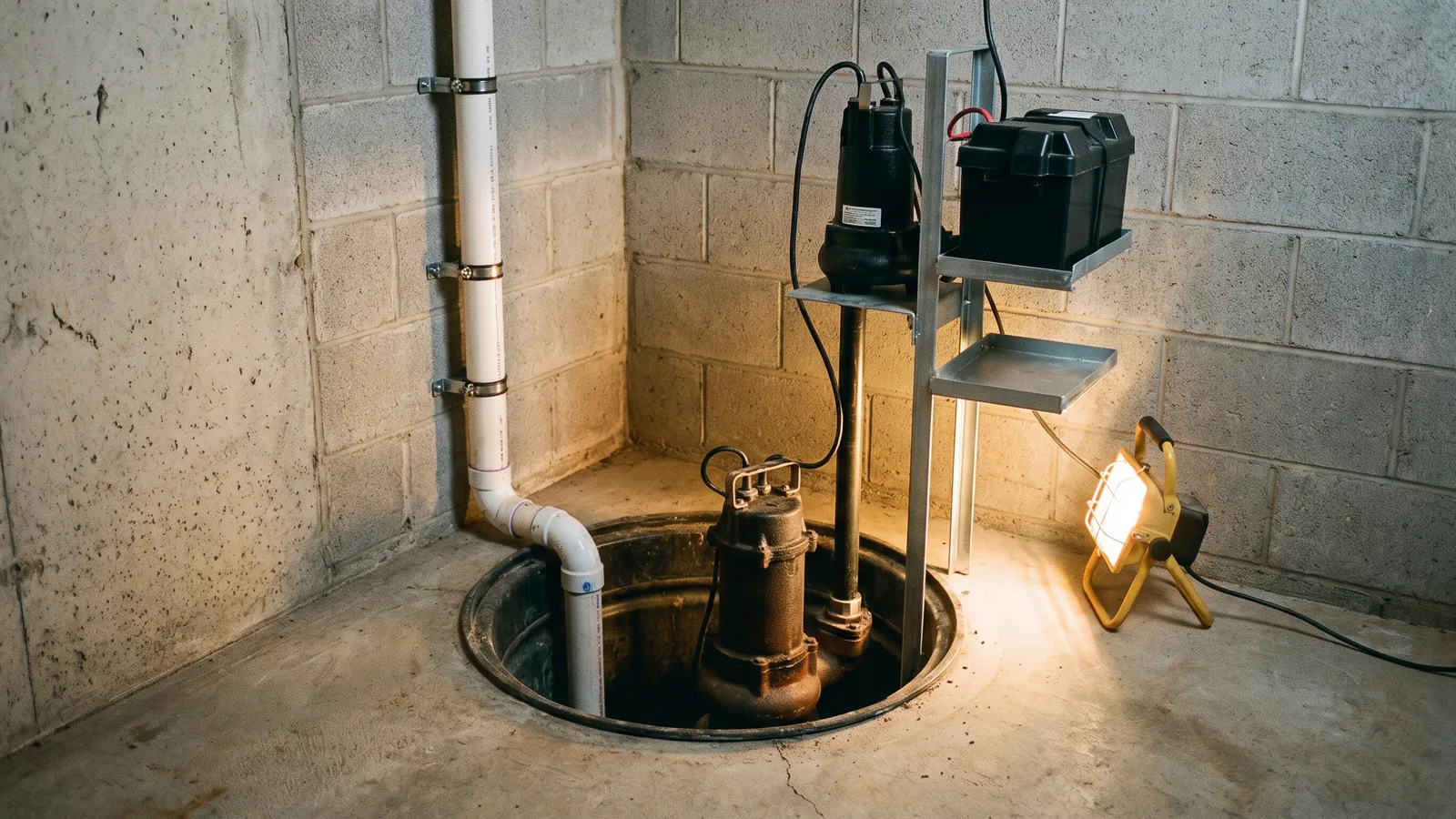
- Dry it out. Standing water is pumped, the dirt is graded so what does arrive runs to a low point, and where water arrives regularly a perimeter drain and a sump are installed below the liner. Debris, old insulation on the ground and anything organic goes out.
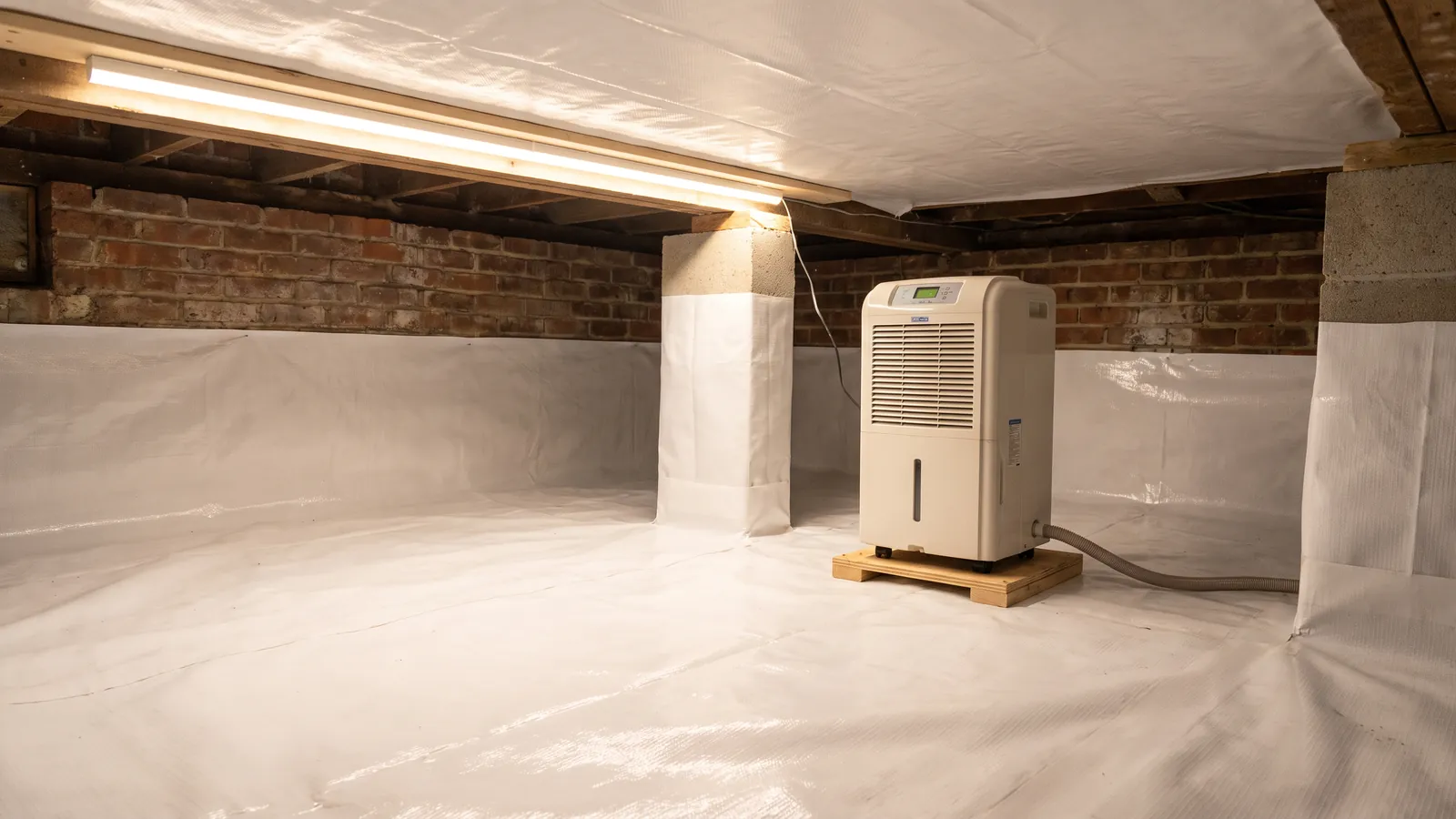
- Seal it. A heavy reinforced polyethylene liner, 12 to 20 mil, is laid over the whole floor, run up the walls and piers and sealed at every seam and penetration with tape and mechanical fasteners. The foundation vents are closed and sealed; the access door gets a gasketed hatch.
- Condition the air. A crawl space dehumidifier sized for the cubic footage runs on a humidistat and drains to the sump or outside. Within a few days the relative humidity falls below 55 percent and stays there, which is the point at which wood stops absorbing moisture and mold stops growing.
That is the sequence. The reason it is worth doing in this climate is the sheer amount of water in Madison County air and soil from May to September. A vented crawl space was designed on the theory that outside air would dry it; in a North Alabama summer, the outside air is wetter than the crawl space, and venting it in condenses water on every cool surface down there: the ductwork, the joists, the subfloor. The wood swells, the floor above moves, the piers sit in damp ground and sink a little, and the house smells faintly of the dirt beneath it. Encapsulation reverses that by treating the crawl space as part of the house instead of part of the outdoors.
The pier and frame work is where encapsulation overlaps with pier and beam repair, and the two are priced together when both are needed, because the liner has to be cut and resealed around any pier that is replaced later. If the floor above reads level and the piers are sound, the encapsulation stands alone. If joists are rotten, that is carpentry and it comes first. What we do not do is mold remediation: if the inspection finds active mold on the framing, the report says so and recommends a remediation contractor before the space is sealed, because sealing a moldy crawl space traps the problem under plastic.
What this work includes
Water traced before the liner
Downspouts, grading, plumbing and the water table checked; standing water drained and, where it recurs, a perimeter drain and sump installed under the liner.
Piers and joists surveyed
A laser reading of the floors above and an inspection of every pier and beam below, with any settlement or rot priced separately and fixed first.
Reinforced liner, sealed
12 to 20 mil reinforced polyethylene across the floor, up the walls and piers, taped and fastened at every seam, vents closed, a gasketed hatch at the access.
Dehumidifier sized to the space
A crawl space unit on a humidistat, draining to the sump or outdoors, holding relative humidity below 55 percent through an Alabama summer.
Clean-out included
Old ground insulation, debris and anything organic removed before the liner goes down.
Mold left to the right trade
Active mold on framing is reported and referred to a remediation contractor before sealing; the encapsulation is scheduled after, not over it.
Crawl space encapsulation prices in Huntsville, AL
| Item | 2026 range | What changes it |
|---|---|---|
| Inspection with humidity and elevation readings | $0 | Free; includes a look at every pier |
| Encapsulation, liner and sealing | $6 – $12 / sq ft | Height, number of piers, liner thickness |
| Crawl space dehumidifier, installed | $1,400 – $2,600 | Capacity, drain route |
| Perimeter drain and sump under the liner | $2,200 – $5,500 | Only where water arrives regularly |
| Debris and old insulation removal | $350 – $1,200 | Volume, access |
| Pier replacement or shimming, each | $600 – $1,400 | See pier and beam |
| Vent sealing and gasketed access door | $400 – $900 | Count of vents, door size |
| Typical 1,500 sq ft crawl, full system | $10,000 – $19,000 | Liner, dehumidifier, drainage, clean-out |
These are 2026 Huntsville-area ranges meant for budgeting, not quotes. The technician measures first and prices the job on site, each item on its own line; nothing is dug, injected or lifted until you have agreed to the sheet, and the sheet holds for 30 days.
From recent jobs
Questions about crawl space encapsulation
Will encapsulation fix my sagging floor?
Not by itself. Encapsulation stops the humidity-driven swelling and shrinking that makes a floor move with the seasons, but a floor that sags because a pier has settled or a joist has rotted needs that pier or joist fixed. The inspection measures the floor and prices both if both are needed.
Do I lose the vents? Isn't the crawl space supposed to breathe?
In this climate the vents are the problem. Summer air in Huntsville carries more water than the crawl space does, so venting it in makes the space wetter, not drier. A sealed, dehumidified crawl space is the approach building science has settled on for the humid Southeast, and it is why the vents are closed.
Does the dehumidifier run all the time?
It runs when the humidistat calls for it, which in July is often and in January is rarely. The electricity is modest, roughly what a refrigerator uses, and it drains itself. It needs a filter cleaned a couple of times a year.
Can you encapsulate a crawl space with standing water in it?
Not until the water is dealt with. If it is a one-time event from a storm, it is pumped and the space dries. If water arrives every wet season, a drain and sump go in below the liner first. Sealing over recurring water is how liners end up floating.
What about radon?
A sealed liner with the vents closed is also most of a radon mitigation system; adding a vent pipe and fan through the liner to the outside completes it. If you have tested high for radon, say so and the report includes that option.
Does the HBLB licence rule apply here?
If the total job, encapsulation plus any pier or framing repair, comes to $10,000 or more, Alabama law requires the contractor to hold a residential home builder's licence from the Home Builders Licensure Board. Full encapsulations often cross that line, and the HBLB number goes on the sheet.