Basement waterproofing for the side of Huntsville where the water sits on rock
Most wet basements in this city are on the east side, where rain perches on limestone and clay a few feet down and leans on the wall all spring. The fix is to give that water somewhere easier to go than your floor. Which somewhere depends on the wall, the lot and how far the water has already come.
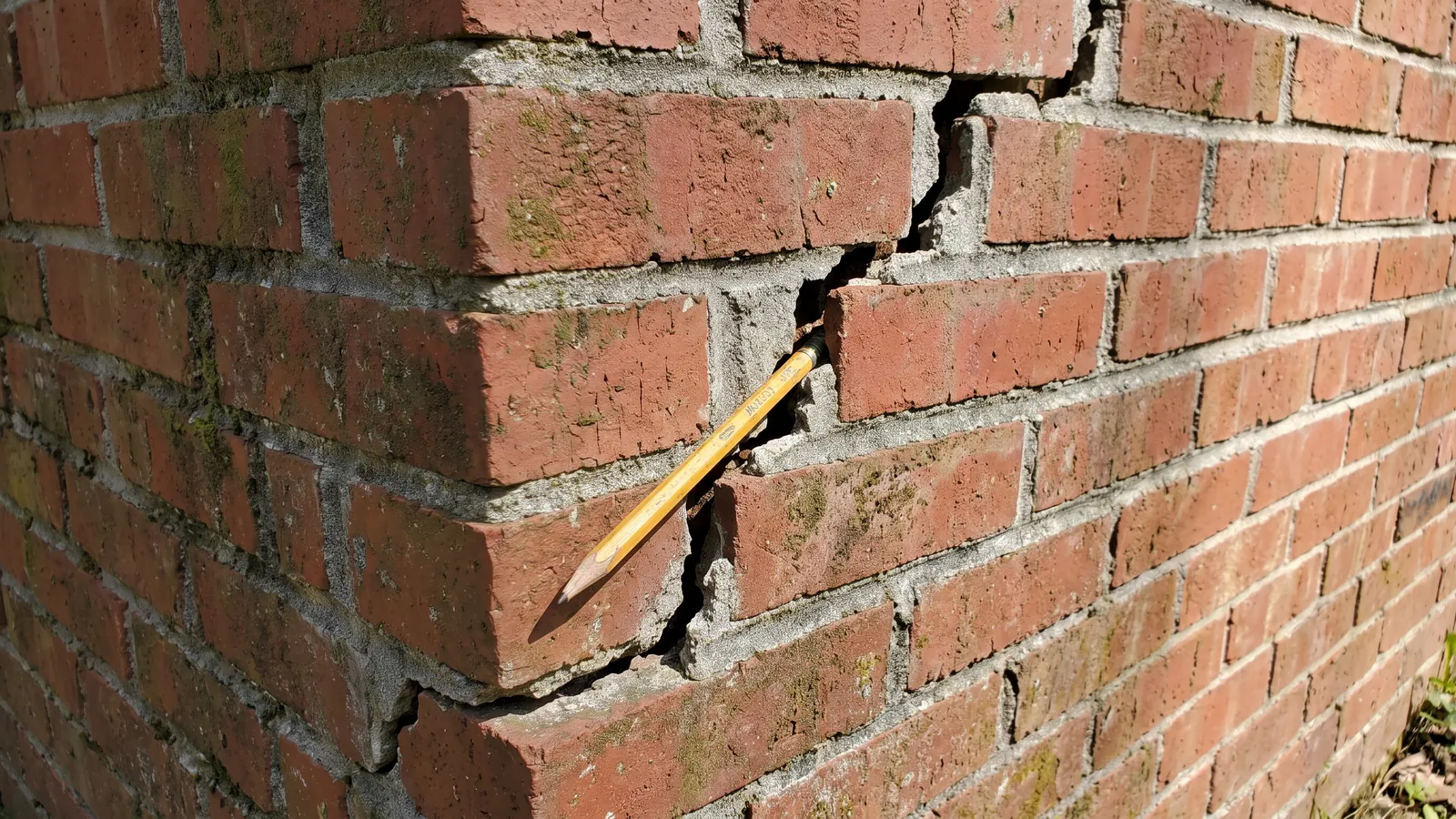
Here is how a Huntsville basement gets wet, in the order it usually happens. Rain falls on a roof, runs down a downspout and lands within a foot of the foundation. The soil there is Dewey or Decatur clay, which takes water slowly, so it pools and soaks down along the outside of the wall. On the east side of the city, below Monte Sano and along the ridges toward Jones Valley and Hampton Cove, that water hits a layer of limestone or dense clay not far below the footing and stops, forming a perched water table that rises through April and May and again in the late fall. It presses against the wall, finds the cold joint where the floor slab meets the wall, finds the hairline cracks and the form-tie holes, and comes in. In a block wall it also fills the cores and weeps out through the mortar at the base.
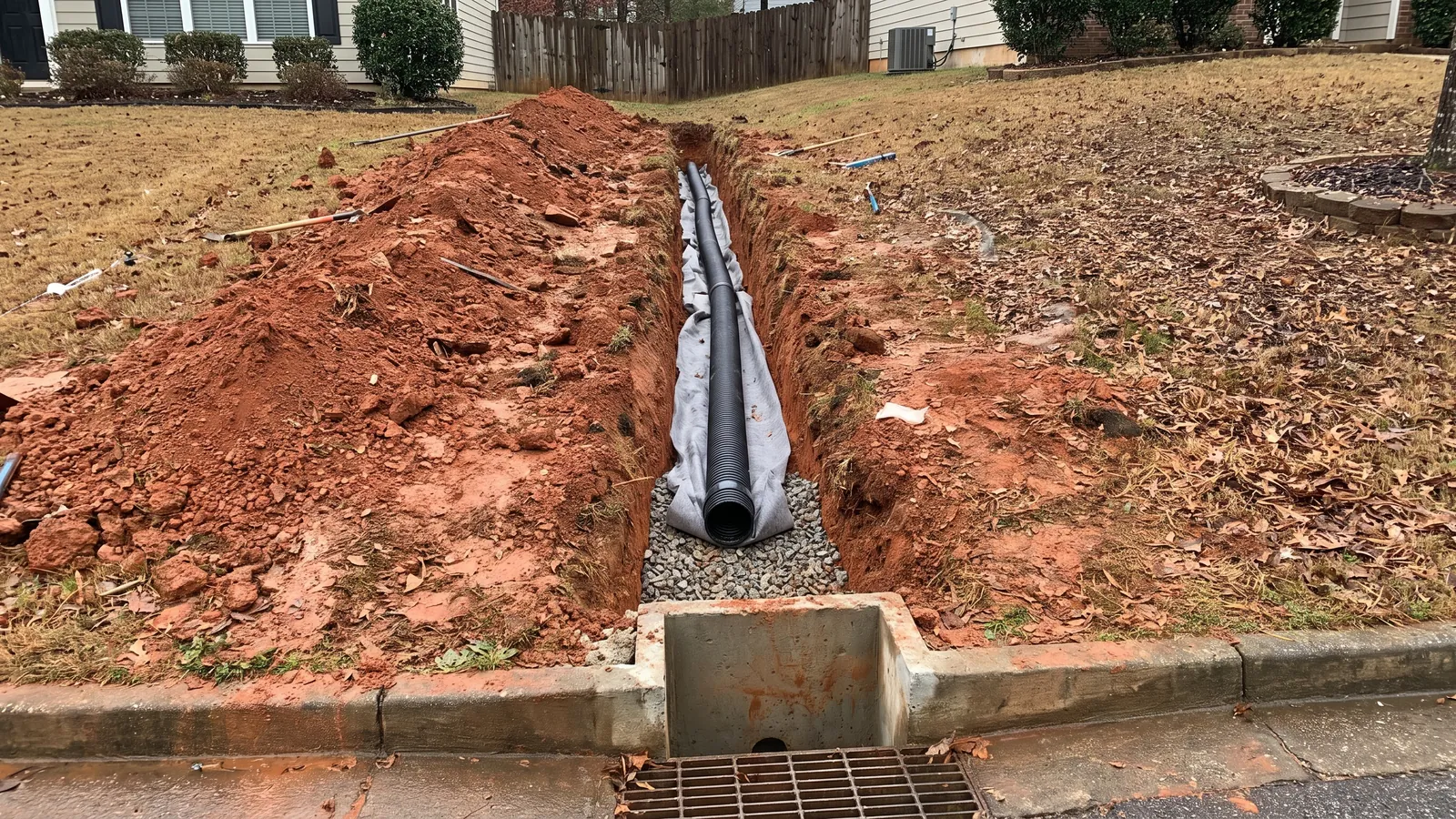
Because the sequence starts outside, so does the fix. Before any drain tile is priced, the inspection looks at where the downspouts discharge, which way the first ten feet of yard slope, whether window wells have drains, and whether a neighbor's lot sheds onto yours. Extending downspouts ten feet, regrading a low spot and adding a French drain across a wet yard will not dry every basement, but they will shrink the problem, and on a lot of houses they are most of the answer. They are also cheap next to the alternatives, so they come first on the sheet.
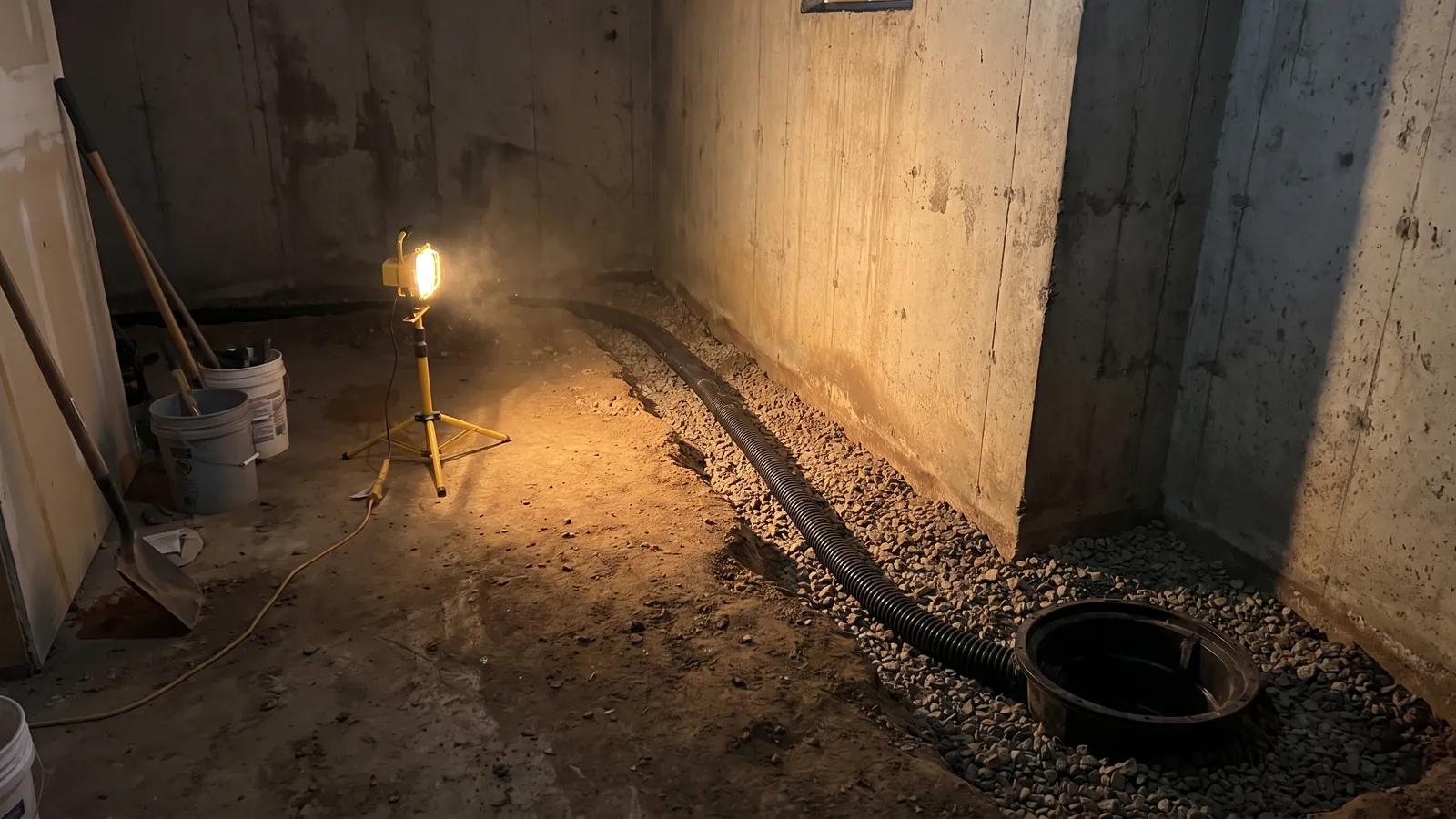
When water is still arriving after that, the usual answer in Huntsville is an interior drainage system: the slab is cut along the inside of the wall, a trench is dug to the footing, perforated pipe is laid in washed gravel, and the floor is poured back. Water that reaches the footing now drops into the pipe before it can rise, and the pipe carries it to a sump basin where a pump lifts it out and sends it well away from the house. A dimpled membrane on the wall directs any seepage down into the trench instead of across the floor. It is a one- to three-day job, it works on block and poured walls alike, and it does not require digging up the yard.
Exterior waterproofing, where the soil is excavated to the footing, the wall is cleaned, cracked and patched, coated with a waterproof membrane and backfilled with gravel over a footing drain, is the better repair when the wall itself is failing: a block wall whose cores are saturated, a poured wall with a long crack that leaks under pressure, or a wall that is bowing and needs to be relieved of the soil load anyway. It costs more, it takes the landscaping with it, and it is the right call in those cases. The inspection says which case yours is; the report lists both options and their prices when the choice is genuinely open.
What this work includes
Drainage first, always
Downspout extensions, grading and yard drains are checked and priced before any wall work, because they cost a fraction of drain tile and often carry half the load.
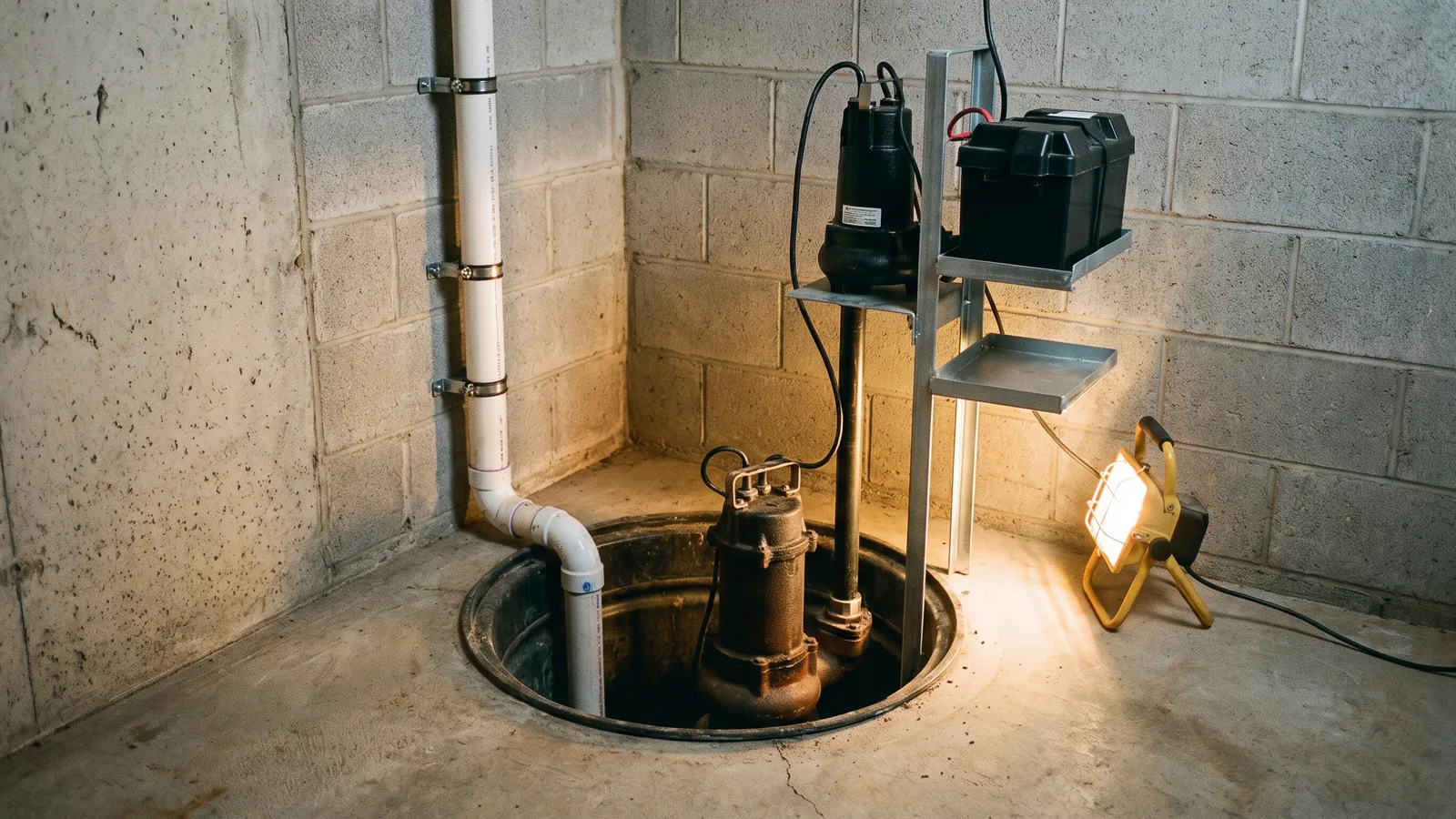
Interior drain tile and sump
The slab cut, trench, perforated pipe in washed gravel, wall membrane and a sump basin with a sized pump: the standard fix for the perched water table on the east side.
Exterior membrane where the wall is the leak
Excavation to the footing, crack repair, waterproof coating, footing drain and gravel backfill when a block or poured wall is failing rather than just wet.
Cold joint and crack sealing
The wall-floor joint and any weeping cracks sealed with polyurethane as part of the system, not left for later.
Sized for the basement
Pump capacity, basin size and discharge distance worked out from the square footage and how the water arrives, with a battery backup option for the storm-season outages.
Written report with both routes
When interior and exterior work are both reasonable, the report prices each and says what you give up with the cheaper one.
Basement waterproofing prices in Huntsville, AL
| Item | 2026 range | What changes it |
|---|---|---|
| Inspection with moisture readings | $0 | Free; includes a drainage walk of the lot |
| Downspout extensions and splash blocks | $180 – $650 | Per house, buried extensions at the high end |
| Regrading along one wall | $600 – $2,400 | Soil brought in, length of wall |
| Interior drain tile with membrane | $65 – $110 / ft | Slab thickness, block vs poured wall |
| Sump basin and primary pump, installed | $1,200 – $2,600 | Capacity, discharge run; see sump pumps |
| Battery backup pump added | $600 – $1,100 | Runtime, charger type |
| Exterior excavation and membrane | $110 – $190 / ft | Depth, access, landscaping to restore |
| Cold joint and crack sealing | $18 – $35 / ft | Usually bundled with drain tile |
These are 2026 Huntsville-area ranges meant for budgeting, not quotes. The technician measures first and prices the job on site, each item on its own line; nothing is dug, injected or lifted until you have agreed to the sheet, and the sheet holds for 30 days.
From recent jobs
Questions about basement waterproofing
Why does my basement only leak in spring?
Because that is when the perched water table rises. Huntsville gets around 55 inches of rain a year, with April and May the heaviest stretch; the water sitting on rock below your footing climbs during those weeks, pushes on the wall and recedes by July. A basement that is dry nine months of the year still has a water problem, just a seasonal one.
Will drain tile make the basement completely dry?
It stops water from rising through the floor and across it, which is the problem for most houses. Humidity is a separate matter: a cool basement under a hot Alabama summer will still condense moisture out of the air, and a dehumidifier handles that. The report distinguishes between the two.
Do you need to dig up my yard?
Not for an interior system; all the work happens inside, and the only outdoor change is a discharge line. Exterior waterproofing does mean excavating to the footing along the affected wall, and the landscaping there has to be redone. We say which you need and why.
What about a finished basement?
Interior drain tile means removing the bottom foot or so of finished wall along the affected run and patching it afterward; that is on the sheet. In a finished basement that leaks in one spot, an exterior repair at that spot alone is sometimes the less disruptive route.
Can I waterproof the wall with paint from inside?
Masonry waterproofing paint seals pores and slows seepage through a sound wall. It does not stop water under pressure, it will peel off a block wall whose cores are full, and it hides where the water is coming from. For a damp wall with no standing water it can be part of the answer; for a leaking one it is not.
Does this need a permit?
Interior drain tile and a sump do not change the structure and typically do not need a City of Huntsville permit, though the electrical circuit for the pump should be installed by a licensed electrician. Exterior excavation next to a public right of way or a utility easement is a different conversation, and Alabama 811 is called before any outdoor digging.