Slab foundation repair, measured in tenths of an inch and lifted in the same
Most houses built in Madison County since the 1980s sit on a concrete slab poured straight on the clay. When one edge of that clay dries or softens, the slab edge goes with it and the house above shows it. Piers put the edge back on something that does not move. The lift is slow, watched, and written down.
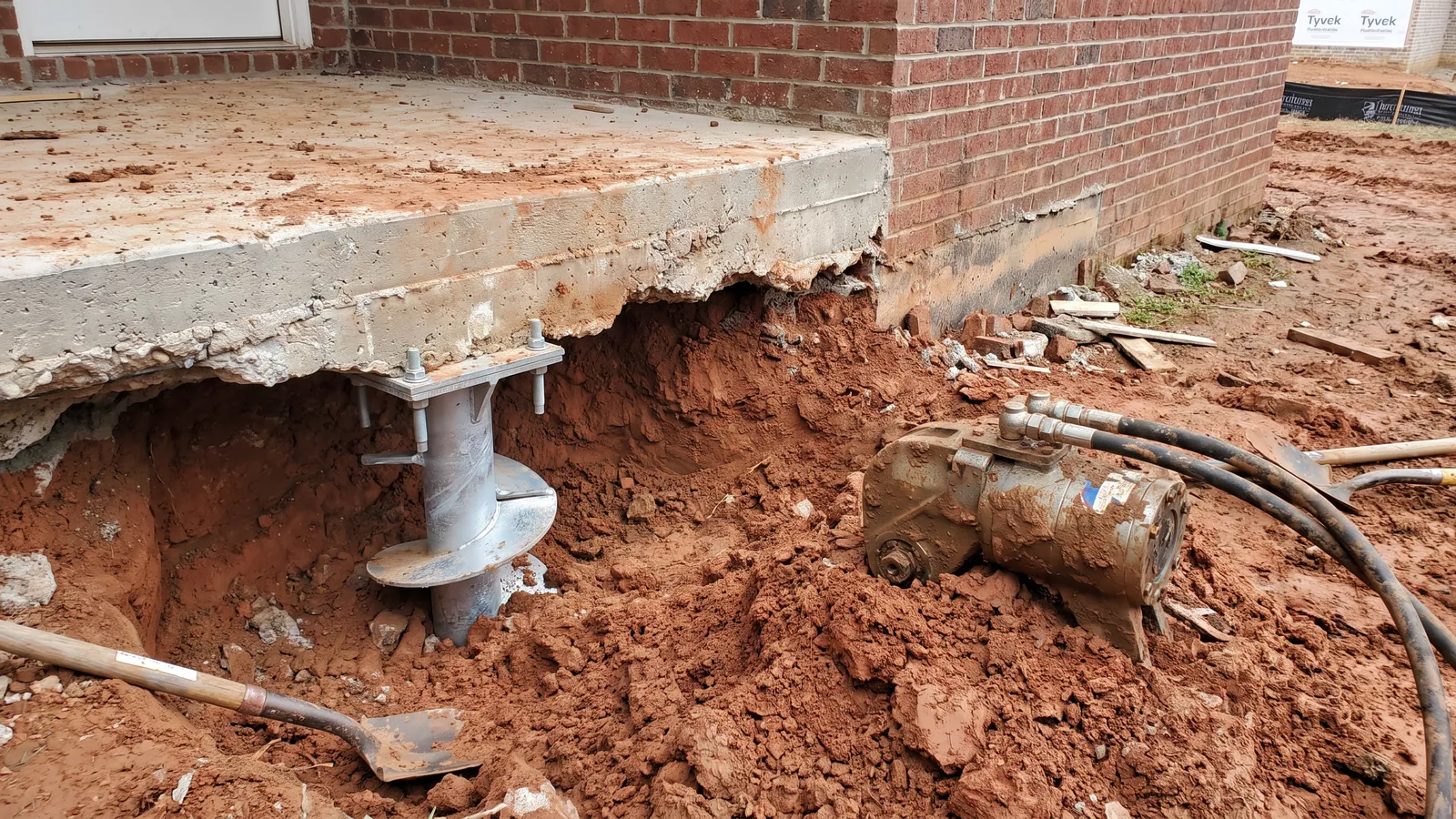
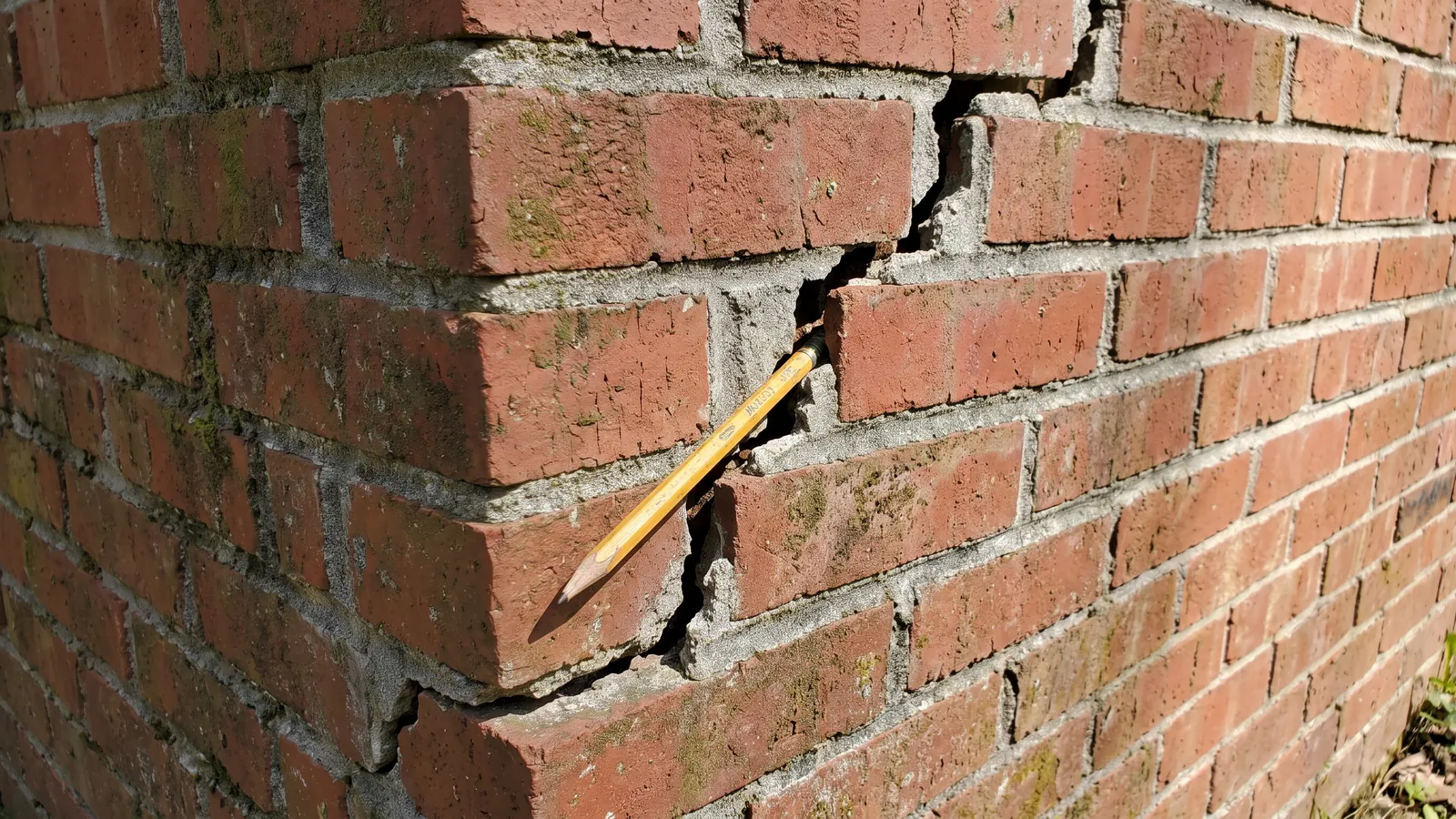
A slab-on-grade foundation is a single piece of concrete, usually four inches thick with thickened edges and interior grade beams, and in newer Huntsville subdivisions often post-tensioned with steel cables that squeeze the slab together after it cures. It is a good foundation for this soil, because it floats on the clay as a unit. It is also only as level as the soil under it, and the clay under a Huntsville slab is Decatur silty clay loam or Dewey silt loam, which swells in the wet season and shrinks in the dry one. The edges and corners of the slab dry out fastest, because the sun and the air get at them, so in a long August the corners drop while the middle stays put. The slab bends at the edge, and the bending shows up as cracks in brick veneer, doors that stick, trim that opens at the corners and a tile floor that develops a slope you can feel in bare feet.
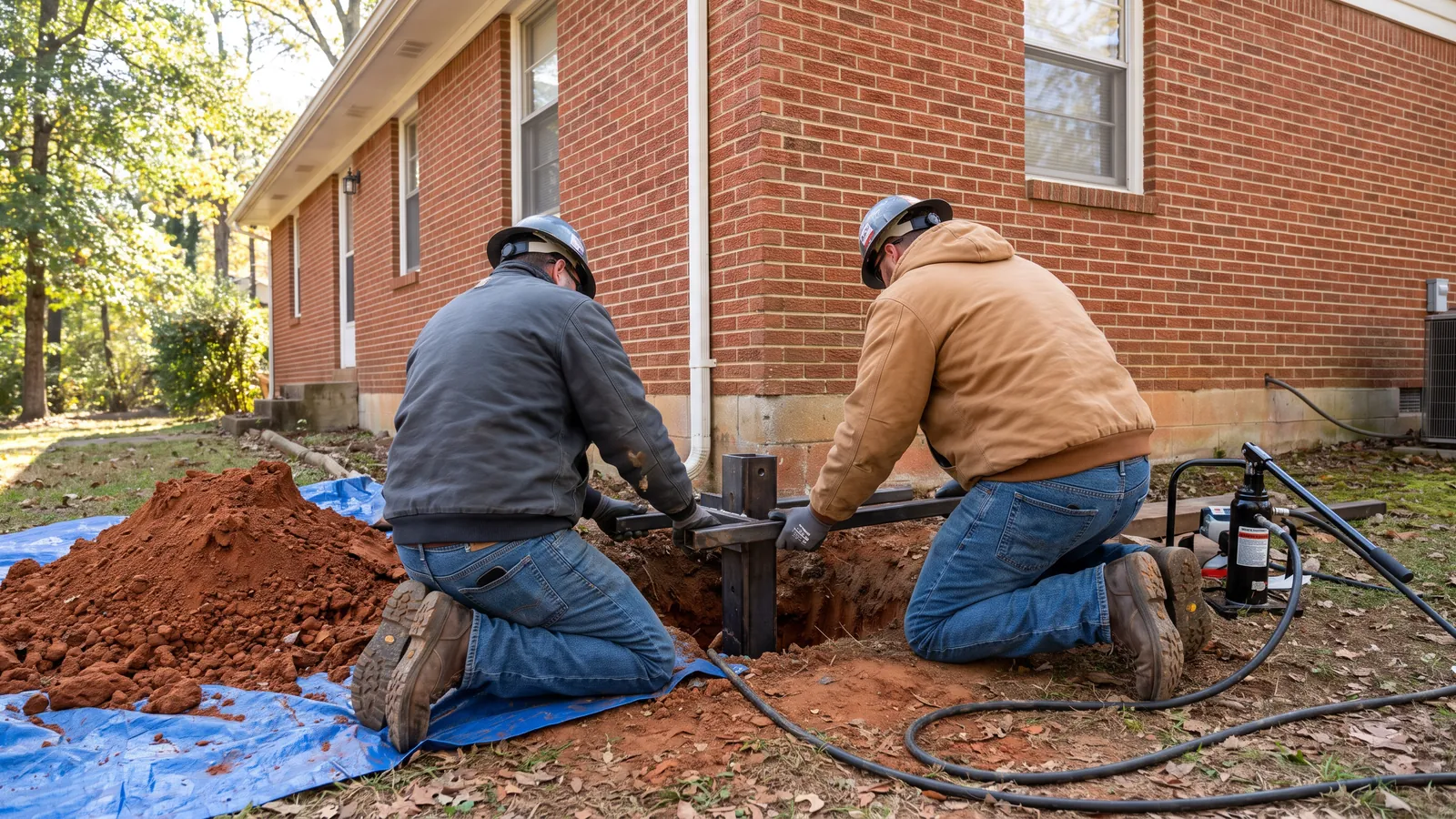
The repair is to carry the settled edge down to soil that does not change with the weather. Steel push piers are driven in two- or three-foot sections through a bracket under the footing, using the weight of the house itself as the reaction, until they refuse against rock or dense soil. On the ridges and the east side that can be a few feet; out on the deeper clay of the north and west it can be twenty or more, and the depth is one of the two things that moves the price. Helical piers, which are screwed in with a torque motor and read their capacity off the torque gauge, are the choice for lighter structures and for soft upper soil where a push pier would want more weight than the house can give.
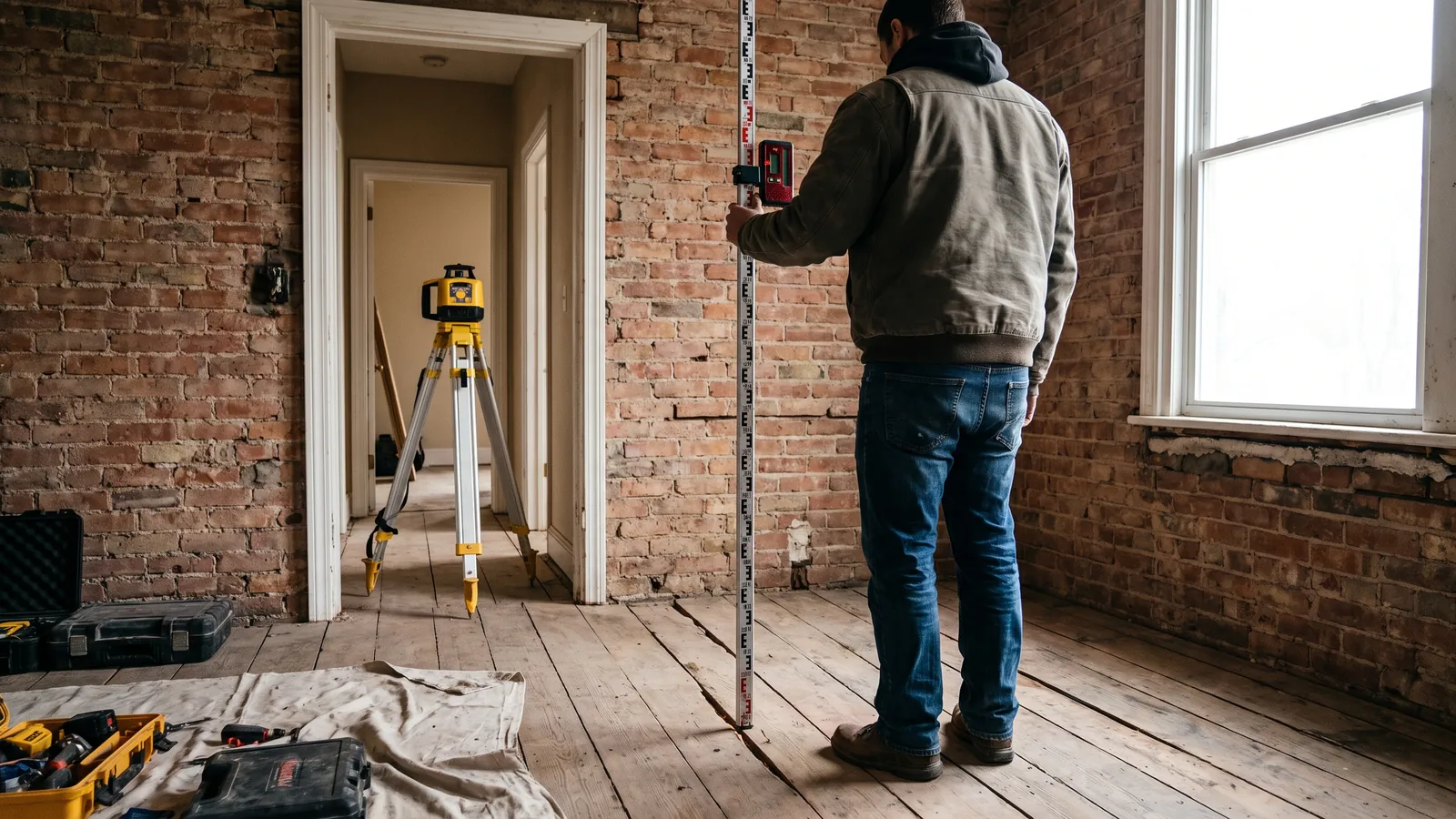
Spacing is the other price driver. Piers go every five to eight feet along the settled run, under the corners and at the heavy points such as a chimney or a brick column, and a typical settled corner wants six to ten of them. Once the brackets are loaded, hydraulic rams on each pier lift the slab in increments while a technician inside reads a laser receiver at the survey points taken during the inspection. The slab comes up until the readings say it is where it should be, or until the house above says it has moved enough; sometimes a full return to the original elevation would open cracks in a wall that has already adjusted, and in those cases a partial lift that stops the movement and squares the frame is the right answer, and it is explained rather than hidden.
Post-tension slabs are repaired the same way, with care taken at the excavation to locate and avoid the cables, which are marked on the slab edge; their presence is noted at inspection, not discovered on the day. And because a settled slab edge is almost always a slab edge that has been getting too dry or too wet, the drainage around it gets the same attention as the piers: downspouts extended, grade corrected, and in a yard that holds water a French drain priced on the same sheet, because piers hold the slab up, and the water fix is what keeps the other corners from following.
What this work includes
Elevation survey across every room
A rotating laser and dozens of survey points, so the shape of the slab is a drawing in the report, not a guess from the cracks.
Push piers to refusal
Steel sections driven through a footing bracket until they bear on rock or dense soil, loaded and locked, with the depth of each pier recorded.
Helical piers where they fit better
Screwed to a torque that proves their capacity, for lighter structures, soft upper clay or where the house cannot provide the reaction a push pier needs.
Post-tension slabs handled
Cable locations marked at inspection and the excavation planned around them before the day of the work.
A watched, incremental lift
Rams on every pier, a technician inside on the laser, the slab brought up in steps and stopped where the readings and the house say so.
Water dealt with alongside
Downspouts, grading and yard drainage priced with the piers, because the corner dropped for a reason.
Slab foundation repair prices in Huntsville, AL
| Item | 2026 range | What changes it |
|---|---|---|
| Inspection with slab elevation survey | $0 | Free; the drawing goes in your report |
| Push pier, driven and loaded | $1,300 – $2,400 | Depth to refusal, bracket, access |
| Helical pier, torqued and loaded | $1,400 – $2,500 | Required torque, length |
| Settled corner, 6–10 piers, lifted | $9,000 – $22,000 | Pier count and depth decide it |
| Interior pier through the slab | $1,800 – $3,200 | Core through the floor, patch and finish |
| Post-tension slab, cable locate and protection | $300 – $700 | Per job, added to the excavation |
| Crack sealing after the lift | $450 – $1,100 | Per crack; see crack repair |
| Drainage correction with the piers | $900 – $3,500 | Downspouts to a French drain |
These are 2026 Huntsville-area ranges meant for budgeting, not quotes. The technician measures first and prices the job on site, each item on its own line; nothing is dug, injected or lifted until you have agreed to the sheet, and the sheet holds for 30 days.
From recent jobs
Questions about slab foundation repair
How do I know it's the slab and not just a crack?
A slab that has moved leaves a pattern: cracks that are wider at the top, doors that stick on one side of the house, a floor that slopes toward a corner, trim gaps that open at that corner. One crack alone proves nothing. The free inspection puts a laser on it and the elevation drawing settles the question.
Will I have to move out during the work?
No. The piers go in from outside at the footing, the excavation is a series of holes roughly three feet square, and the lift takes a few hours on the last day. You will hear it and you may feel it. The crew is usually finished in two to three working days after the permit and the Alabama 811 marks are in hand.
What happens to my landscaping?
Shrubs and plants along the settled run are moved aside where possible and set back afterward, and the holes are backfilled and tamped. Established beds right against the house do get disturbed; the report tells you which ones before you decide.
Can a slab be lifted with foam instead of piers?
Polyurethane foam injection lifts a slab by filling voids beneath it and is useful for a sunken patio or a shop floor. It does not carry the load of a house down to stable soil, and on shrink-swell clay the foam rides up and down with the same clay that caused the problem. For a settled house footing in this county, piers are the repair.
Is there a permit for piers in Huntsville?
Yes, inside the city limits underpinning is structural work and is permitted through City of Huntsville Building Services, with an inspection. In Madison, Decatur, Athens and the county, the local office applies. Alabama 811 marks the utilities two business days before the excavation. All of that is scheduled by the crew and shown on the sheet.
Does the contractor need a state licence for this?
A pier job on a house is almost always $10,000 or more, which means Alabama law requires the contractor to hold a residential home builder's licence from the Home Builders Licensure Board. The HBLB number is on the sheet and the Board's website lets you confirm it before you sign.