Crack repair that starts by deciding whether the crack is the problem
Concrete cracks. Some of it is curing, some of it is the clay underneath moving, and some of it is water looking for a way in. The repair is different for each, and so is the urgency, which is why the first visit is a measurement and a verdict rather than a tube of epoxy.
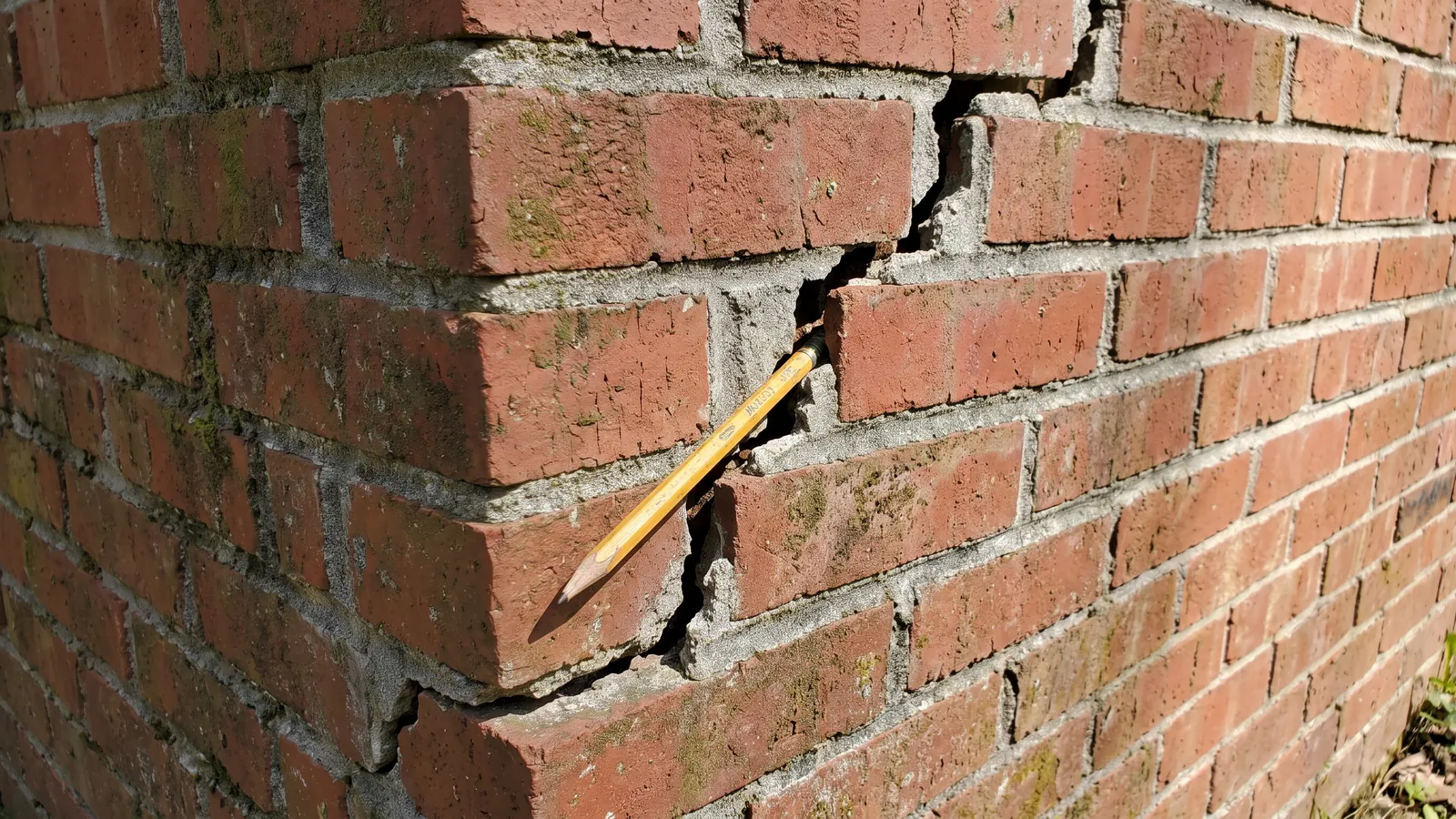
| Crack | Where it shows | What it usually means | Urgency |
|---|---|---|---|
| Vertical hairline | Poured basement wall, slab | Shrinkage as the concrete cured, often years ago | Watch it; seal if it leaks |
| Vertical, wider at top | Wall or brick at a corner | That end of the footing has dropped | Inspect; may need a pier |
| Stair-step | Brick or block mortar joints | Differential settlement under the wall | Measure width; over a quarter inch, call |
| Horizontal | Block basement wall, mid-height | Soil pressure pushing the wall in | Soon; see bowing walls |
| Wet or weeping | Any wall or the wall-floor joint | Water finding the path of least resistance | Seal, then fix the water |
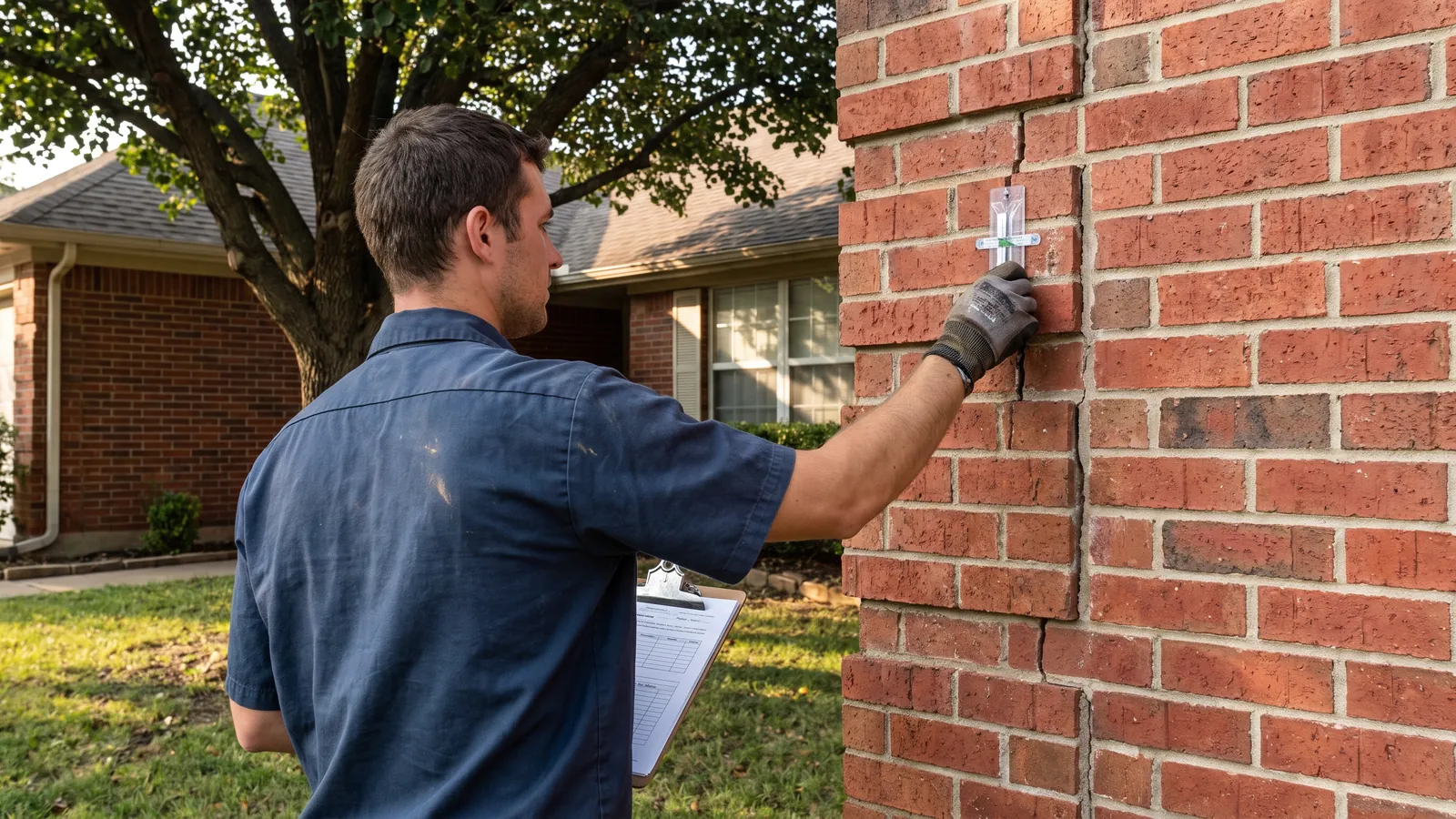
That table is most of what a homeowner needs to know, and the inspection confirms which row a particular crack belongs to. Width is measured with a gauge, not eyeballed; a crack that is wider at the top than the bottom gets photographed at both ends; and every crack gets a dated reference mark so the next visit can tell whether it moved. In a house on Decatur or Dewey clay a fair number of cracks turn out to be seasonal, opening a little in a dry September and closing again by March. Those get a note in the report and nothing else.
When a crack does want sealing, the material follows the job. Epoxy injection is for structural cracks in sound concrete where the two sides need to be glued back into one piece; it is stiff, strong and permanent, and useless if the crack is still moving. Polyurethane injection is for cracks that leak: the resin expands into the crack and the voids behind it, stays flexible, and tolerates the small seasonal movement a Huntsville wall makes. Stair-step cracks in brick veneer are re-pointed with mortar after the cause is dealt with, because veneer is a skin and the problem is behind it.
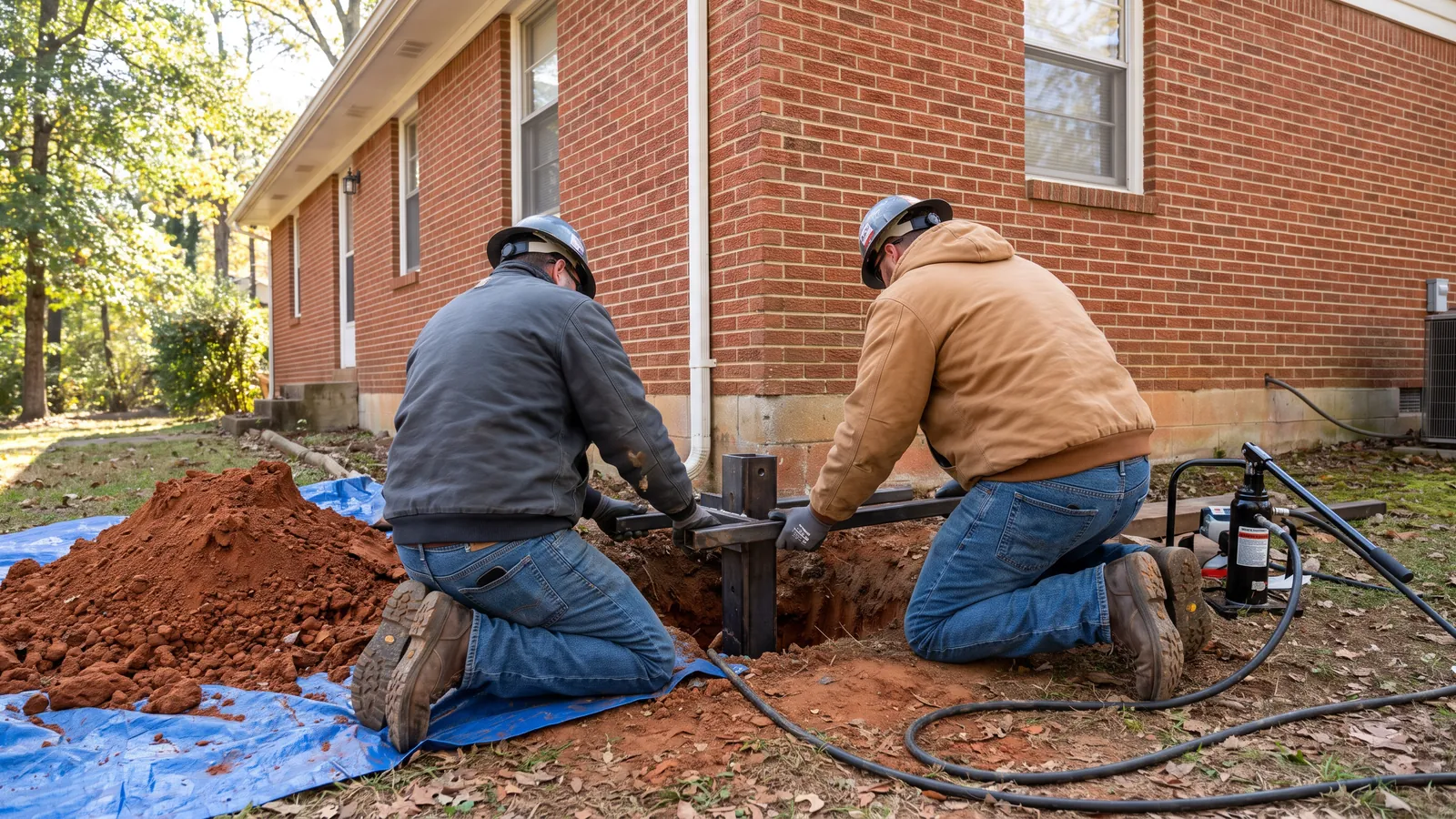
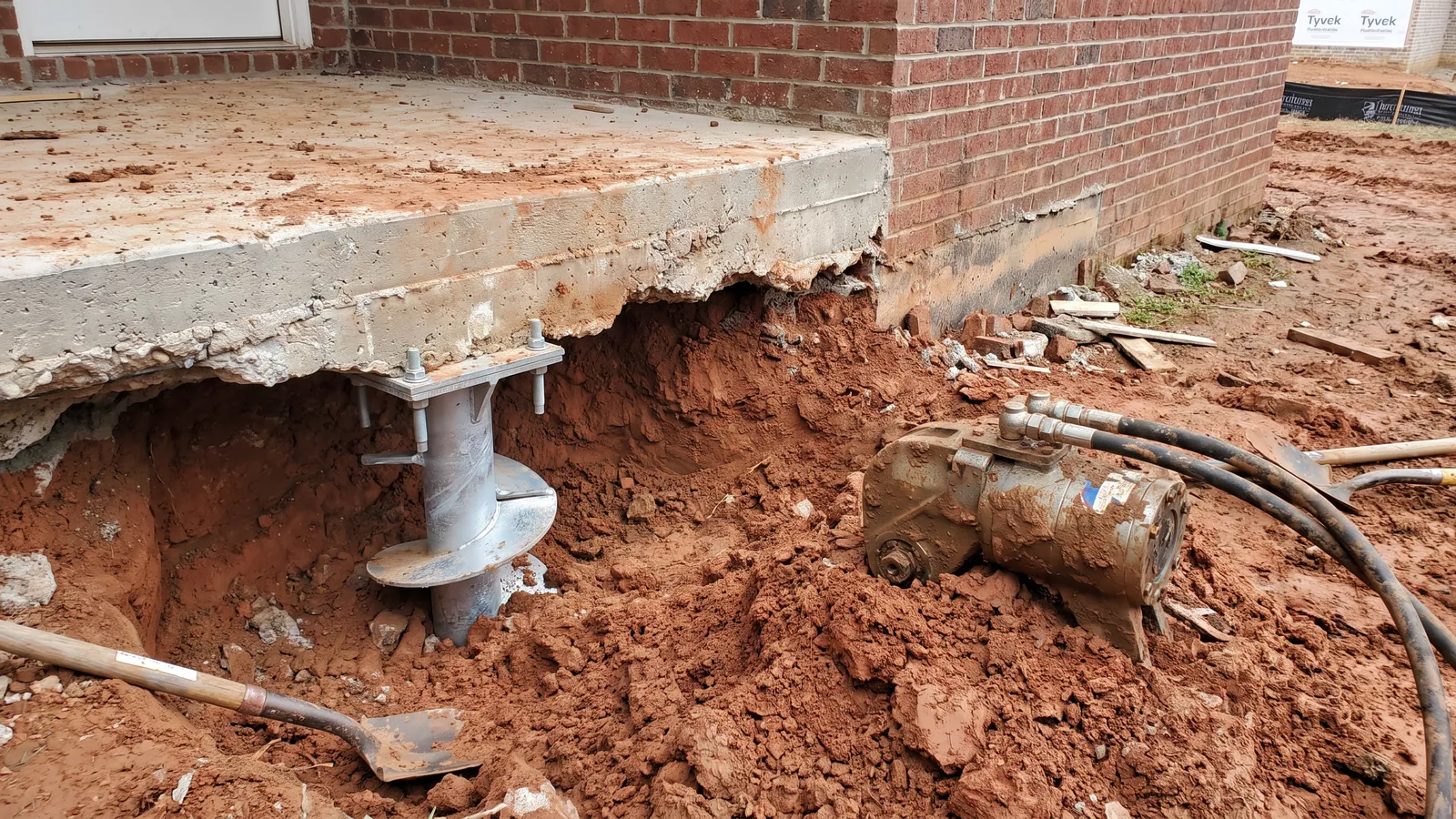
The honest part of this page is that a crack is often a symptom. If the footing under that corner is still settling, sealing the crack hides the evidence for a season and then it reopens beside the repair. The inspection is free precisely so that question gets asked first: is the crack moving, and if so, what is moving it? When the answer is a dropped footing, the conversation turns to piers, and the crack gets sealed after the lift, not before. When the answer is a wet wall, the conversation turns to drainage. Only when the answer is "it finished moving years ago" is injection the whole repair.
What this work includes
Gauged, photographed, dated
Every crack measured for width at both ends, photographed with a scale, and marked so a later visit can prove whether it grew.
The right resin
Epoxy where the concrete needs structural bond and is no longer moving; expanding polyurethane where water is the problem and the wall still breathes with the seasons.
Brick handled as brick
Stair-step cracks in veneer are re-pointed with matched mortar after the footing is dealt with, not injected, because the veneer is not what is holding the house up.
Cause named in writing
If a crack is being driven by settling or water, the report says so and prices that fix; the crack is sealed afterward so the repair holds.
Cosmetic cracks called cosmetic
A cured shrinkage crack that has not changed and does not leak gets a note and a recommendation to watch it, not an invoice.
No permit for plain injection
Sealing a crack without structural change usually needs no City of Huntsville permit; if the job grows into piers or anchors, the permit goes on the sheet.
Foundation crack repair prices in Huntsville, AL
| Item | 2026 range | What changes it |
|---|---|---|
| Inspection and crack survey | $0 | Free; includes gauge readings and photos |
| Polyurethane injection, leaking crack | $450 – $900 | Per crack, up to about 8 ft |
| Epoxy injection, structural crack | $550 – $1,100 | Per crack; depth and width |
| Additional cracks, same visit | $300 – $600 | Each; setup is already paid for |
| Brick re-pointing, stair-step crack | $400 – $1,200 | Length, mortar match, after any lift |
| Wall-floor cold joint sealing | $18 – $35 / ft | Often paired with drain tile |
| Crack monitoring gauge installed | $60 – $120 | Each; read it yourself over a season |
| Exterior crack excavation and membrane patch | $800 – $2,200 | When injection cannot reach it |
These are 2026 Huntsville-area ranges meant for budgeting, not quotes. The technician measures first and prices the job on site, each item on its own line; nothing is dug, injected or lifted until you have agreed to the sheet, and the sheet holds for 30 days.
From recent jobs
Questions about foundation crack repair
Can I seal a crack myself with a kit?
For a dry, hairline, non-structural crack, a hardware-store polyurethane kit can work and does no harm. For anything wet, anything wider than a credit card, anything horizontal, or any crack you have not had looked at, please do not: the filler hides the one thing the technician needs to see, and a half-filled crack is harder to inject properly later.
Will the crack come back?
A properly injected crack in concrete that has stopped moving does not reopen; the resin is stronger than the concrete around it. A crack that reopens was being driven by settlement or water pressure that was not addressed, which is the whole reason the inspection comes first.
What about cracks in the slab floor?
Hairline slab cracks are normal and almost never structural. A slab crack with a height difference across it, one that is growing, or one near a plumbing wall that stays damp gets looked at; it may point to a settling slab or a leak under it.
How soon can a leaking crack be sealed?
Usually within a week of the inspection, and sooner if water is actively coming in. Polyurethane injection works in a wet crack, so there is no need to wait for a dry spell.
Do stair-step cracks always mean piers?
No. A narrow stair-step crack that has not changed in a year can be re-pointed and watched. A wide one, or one paired with sticking doors and a sloping floor on that side of the house, usually does mean that corner has dropped, and re-pointing alone would be money spent twice.
Is crack repair covered by home insurance?
Gradual settlement and the cracks it causes are generally excluded from standard homeowner policies in Alabama. Sudden events such as a plumbing break under the slab or storm damage are a different matter and worth a call to your agent. We put the findings in writing partly so you have something to send them.